
 mainwp
5 Feb
mainwp
5 Feb
How to Spot and Treat Damp
The damp problem continues to destroy buildings across Surrey because it affects both Guildford’s historical cottages and Woking’s modern residential areas. The unmonitored entry of moisture into your building threatens to destroy its structural elements while the exterior and interior paint surfaces develop peeling and blistering and mold growth and staining.
Surrey Painters identifies paint problems which serve as signs that moisture exists underneath the surface. The process of painting over damaged sections becomes useless when the real problem remains untreated because it leads to accelerated material deterioration without making any positive difference.
The guide will show you how to recognize typical paint problems which result from dampness and explain their origins and proper treatment methods which comply with all regulations for 2026.
Understanding Damp in UK Homes
The weather patterns in Surrey together with its clay-dense earth and regular moisture levels produce perfect conditions for damp to develop. The Met Office shows southern England receives over 150 rainy days each year while Surrey features London Clay which stops water from draining away to build up higher groundwater levels.
There are three main types of damp in UK homes:
- The ground moisture rises through capillary action because the damp-proof course in most cases proves either defective or nonexistent.
- Water enters buildings through walls and roofs and windows when defects such as cracked render and blocked gutters and faulty pointing exist.
- The most common type of damp results from inadequate ventilation which allows moisture from cooking and bathing and indoor clothes drying to build up.
Paint surfaces show different kinds of damage through various signs which appear on their painted surfaces.
Common Damp-Related Paint Problems—and What They Mean
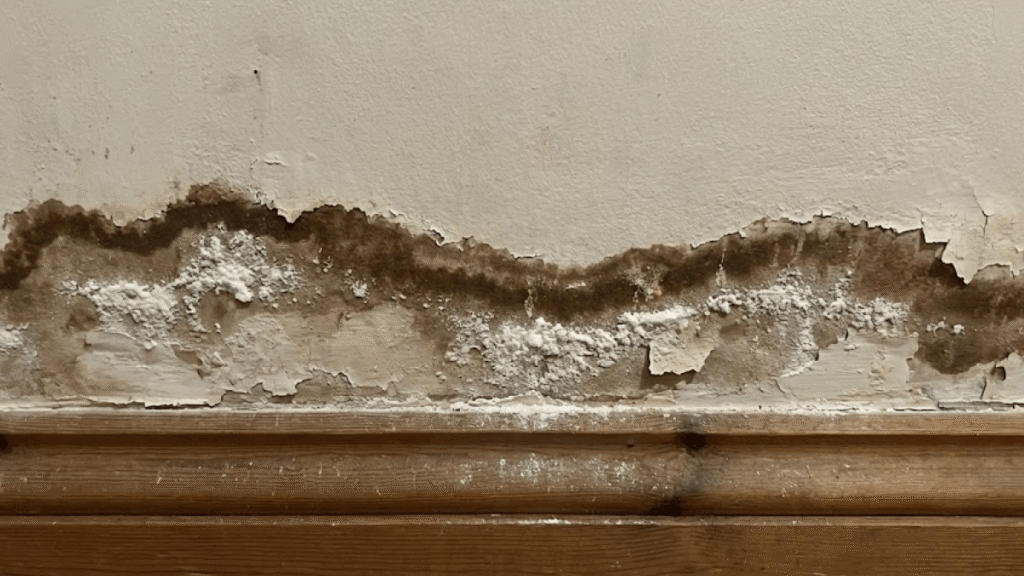
1. Blistering or Peeling Paint
- Where it appears: Walls, ceilings, window reveals
- Trapped moisture behind the paint film becomes the main reason because condensation and penetrating damp create these conditions.
- Water vapor exerts pressure on the painted surface which leads to paint detachment from the wall surface.
Note: If peeling occurs only on external walls and stops at skirting level, rising damp may be involved.
2. Mould or Mildew Growth
- The black and green and grey fuzzy patches tend to grow in places where furniture stands or in corners.
- Mould spores find their perfect environment to grow because of two factors which include high humidity and poor airflow.
- The appearance of mould goes beyond being an eyesore because it creates breathing problems which mainly affect children and older people.
3. Tidemarks and Staining
- Look for: Yellowish or brown horizontal lines on lower wall sections
- The presence of yellowish or brown horizontal lines on lower wall sections indicates rising damp which transports dissolved salts (hygroscopic salts) that continue to attract moisture after the initial damp source has been resolved.
4. Powdery or Chalky Residue (Efflorescence)
- The white powdery substance appears on bricks outside and on walls inside near the outside walls.
- The process of salt migration to surfaces occurs when water evaporates which shows that moisture continues to move through the material.
Step-by-Step: Treating Damp-Related Paint Failures
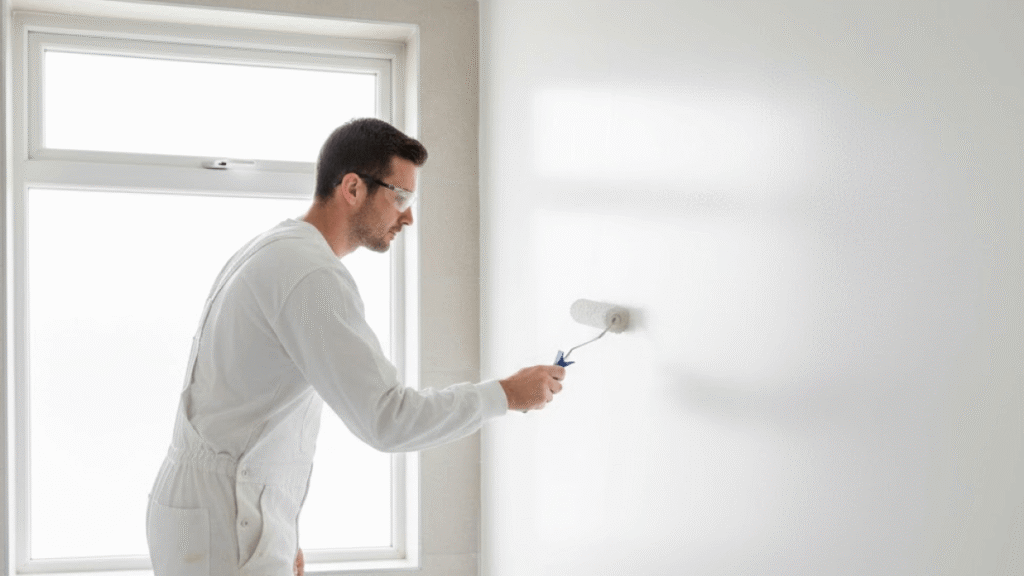
Step 1: Identify and Fix the Source
Before you start painting:
- Check gutters and downpipes for blockages
- Inspect external walls for cracks in render or missing pointing
- Ensure extractor fans are working in kitchens and bathrooms
- Verify your home has a functioning damp-proof course (DPC) especially if built before 1920
Step 2: Dry Out Affected Areas
The process of dehumidification requires you to operate devices which draw moisture from the air while you should open windows for better air movement and install trickle vents for additional ventilation. The walls need to reach complete dryness which takes about four to six weeks after you fix the source before you can start decorating.
Step 3: Remove Damaged Paint and Clean Surfaces
- Remove all paint that has become detached or started to blister.
- The walls require washing with Polycell Mould Killer which serves as a fungicidal solution to remove all existing spore growth.
- Rinse and allow to dry completely
Never sand mould-this releases spores into the air.
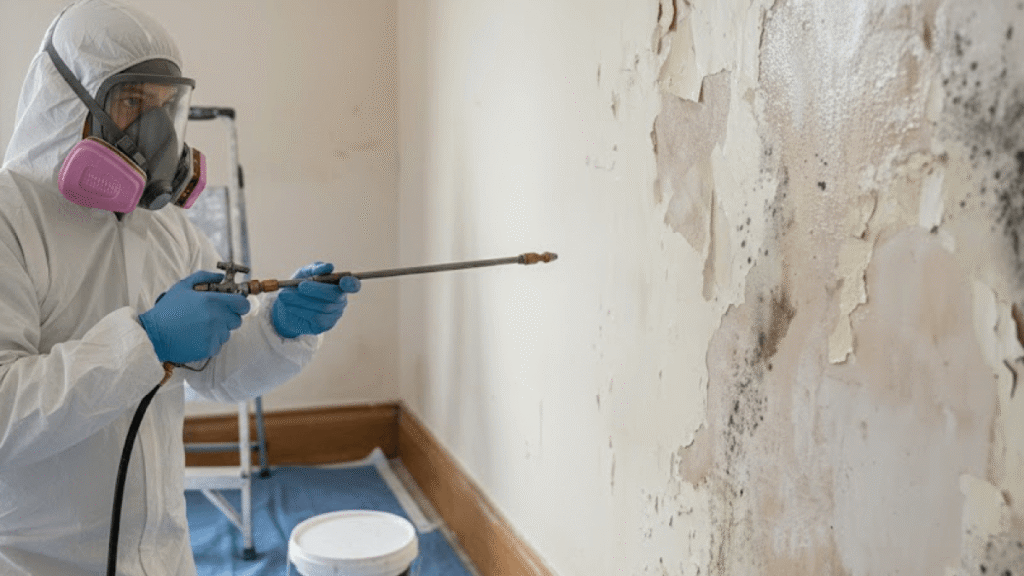
Step 4: Use the Right Products
- The rooms which experience condensation need painters to use mould-resistant microporous paint products such as Zinsser Perma-White and Dulux Mould Shield.
- For salt-contaminated walls: Use a salt-resistant primer followed by breathable finishes
- The use of vinyl or non-breathable paints should be avoided because these materials create moisture traps which lead to paint failure in the future.
When to Call a Professional
Homeowners can handle basic condensation problems on their own but rising damp and penetrating damp need professional help to solve. At Surrey Painters, we collaborate with certified damp specialists to ensure:
- Proper diagnosis and remediation
- Safe removal of contaminated materials
- Use of compliant, breathable finishes
Our team provides specialized services for period properties through lime-compatible paints and traditional plaster repairs which safeguard heritage buildings from damage that modern construction materials would cause.
Related Reading:
Prevention: Protecting Your Home Long-Term
Once treated, prevent recurrence with:
- Trickle vents in windows (required under Building Regulations Part F since 2022)
- Extractor fans with humidity sensors in bathrooms
- Regular gutter maintenance (clean twice yearly)
- Adequate heating and cross-ventilation—even in winter
The home environment protects against dampness when it maintains proper ventilation and temperature control at moderate levels.
Final Thoughts
Damp-related paint problems are never just a decorating issue—they’re a warning sign. Homeowners in Surrey can protect their homes and family health through quick identification of damp symptoms which need immediate appropriate treatment.
Quick solutions will not protect your home. You need to find the root of the problem and let the area dry completely before you apply products which meet all standards and allow air to pass through. When in doubt, seek professional advice-because in the battle against damp, preparation beats repainting every time.