
 mainwp
13 Feb
mainwp
13 Feb
New Build Decorating Checklist: Surrey Homeowner Pitfalls
First-time residents who move into Surrey experience an exciting life transition, yet most new residents do not understand that a property which seems complete actually needs more work.
The Building Regulations only provide developers with basic compliance because new construction projects use base-level finishes which focus on quick completion and budget-friendly solutions instead of building strength and individual design choices.
Our team at Surrey Painters has completed numerous new construction projects throughout Guildford and Woking and Epsom and Reigate, yet we continue to observe identical errors in these developments.
The combination of improperly sealed joints with paint selections which break compliance standards will result in wall paint peeling and mold development that requires expensive maintenance work within a year to eighteen months.
The guide contains our professional new build decorator checklist which Surrey residents can follow to protect their home from typical errors while achieving their property readiness for moving in.
Why New Builds Need Professional Decorating
The Building Regulations require developers to follow Part L (Conservation of Fuel and Power) and Part M (Access) but these standards do not require detailed aesthetic or surface-quality requirements.
The National House Building Council (NHBC) sets fundamental standards which builders tend to ignore when they rush through finish work during construction’s last stages while working under wet and chilly conditions which weaken paint adhesion.
According to a 2024 NHBC report, over 60% of snagging claims relate to internal finishes-especially paint defects, uneven plaster, and unsealed gaps around windows and skirting.
Your developer warranty provides protection against structural problems, but it does not cover cosmetic issues which include uneven paintwork and insufficient primer application. That’s why a post-handover decorating refresh is not just advisable-it’s essential.
The Essential New Build Decorator Checklist Surrey Homeowners Should Use
1. Inspect for Inadequate Surface Preparation
Construction projects which start without necessary preparation work will skip the vital steps that need to happen before builders can start their actual building work.
- The unprimed surface of plasterboard absorbs paint through an irregular process which results in streaky patterns and weak paint adhesion.
- The skim coats function as quick surface defect covers but these defects will become obvious to viewers when paint completes its application.
- The construction dust which accumulates on surfaces prevents paint from achieving a proper bond with these surfaces.
Action: Lightly sand all walls, fill minor imperfections, and wipe down with a damp cloth before any redecorating.
Pro Tip: Never assume white walls are “ready to go.” Most developer-applied paint is a low-grade vinyl matt—thin, non-washable, and prone to marking.
2. Check for Missing Seals and Gaps
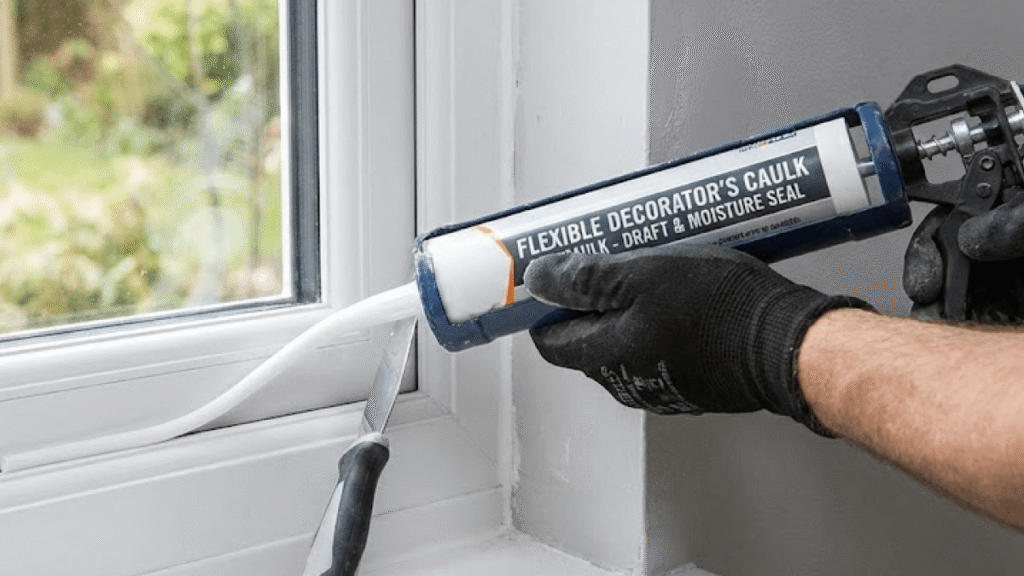
The main problem with new buildings emerges because developers do not put in place flexible sealant which serves to defend these specific locations.
- Window and door frames
- Skirting-board-to-floor junctions
- Corners between walls and ceilings
The structure contains openings which allow water to enter while air moves through the space and unwanted creatures can enter the area. Paint films which lack flexibility will develop cracks because temperature fluctuations cause them to expand and contract.
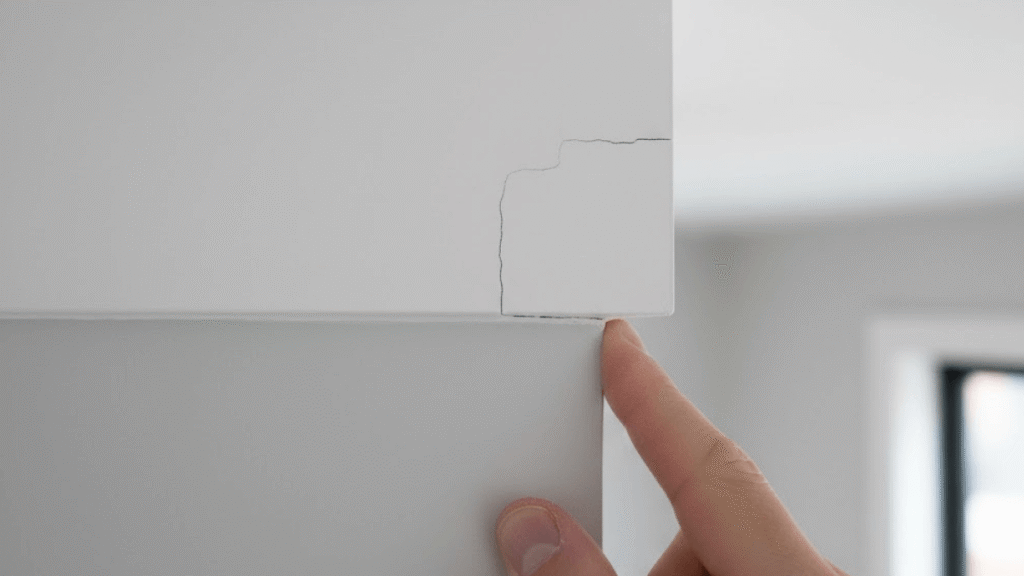
Action: Apply a high-quality decorator’s caulk or flexible acrylic sealant before painting. This is especially important in bathrooms and kitchens, where humidity fluctuates.
Regulatory Note: While not explicitly required by Building Regulations, proper sealing supports compliance with Part C (Moisture Resistance) and Part F (Ventilation) by reducing condensation risks.
3. Upgrade to Washable, Durable Paints
The paint developers choose for their projects fails to meet the needs which families require for their homes. Standard vinyl matt:
- Can’t be wiped clean
- Shows scuffs and marks instantly
- Lacks mould resistance
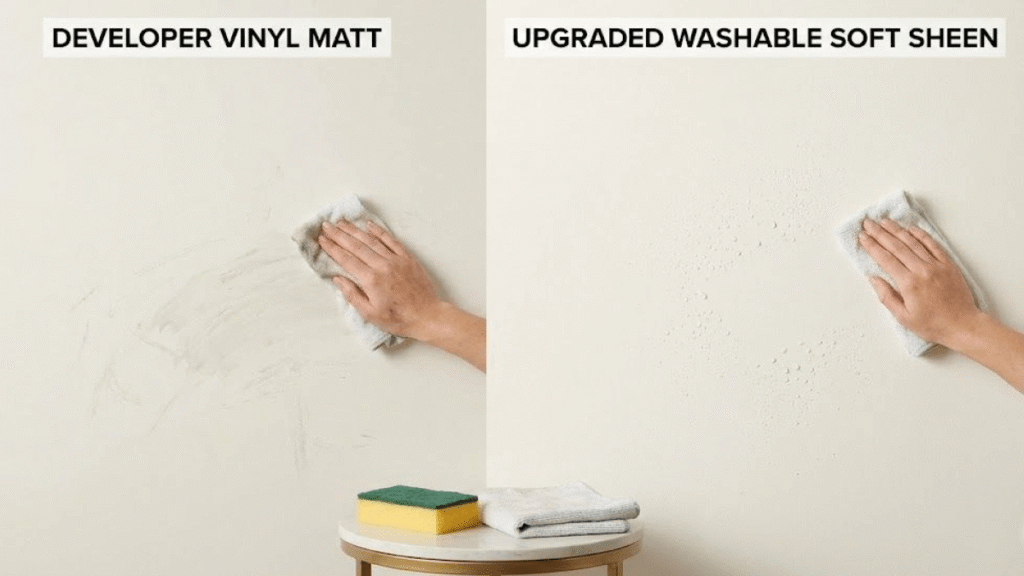
For high-traffic areas like hallways, stairs, and children’s rooms, switch to:
- Choose soft gloss or matt paints, such as Dulux Easycare or Farrow and Ball Modern Emulsion.
- The bathrooms and utility rooms need mould-resistant paint formulations to protect their surfaces.
- The paints you choose should have low VOC levels and allow your walls to breathe because this helps keep your indoor air safe to breathe.
Action: Repaint all main living areas with quality finishes. It’s far cheaper than repainting every 18 months.
4. Don’t Forget the Woodwork
The newly built doors and skirtings and architraves receive their finish from just one coat of inexpensive gloss paint which quickly develops yellow stains and becomes vulnerable to chipping.
Action:
- Sand the surface lightly to remove all factory dust particles.
- Apply a proper undercoat
- Finish with two topcoats of durable satinwood or water-based gloss
Our interior woodwork paint spraying service provides a specialist solution which delivers a perfect finish that resembles factory quality while eliminating all brush stroke marks.
5. Address Ventilation and Condensation Risks
New buildings have airtight construction which improves their energy efficiency, yet it creates potential problems when it comes to managing moisture levels.
The absence of proper ventilation during everyday home activities which include showering and cooking and clothes drying causes condensation which results in black mould growth on exterior walls and window frames.
Action:
- Ensure extractor fans are working in bathrooms and kitchens
- Keep trickle vents open (required under Part F 2022)
- Use anti-mould paint in at-risk zones
Warning: Painting over existing mould without treatment will only mask the problem. Always clean with a fungicidal wash first.
6. Plan for Future Maintenance
New buildings lack the natural surface aging which previous construction projects used to cover up their signs of deterioration. The surface shows its entire damage with every scratch and every dent and every stain. Make your life easier by:
- Choosing mid-tone colours that hide marks better than stark white
- Using consistent paint batches (“boxing” multiple tins) for future touch-ups
- Keeping leftover paint labelled for repairs
Our team provides clients with a maintenance log after completion-detailing paint codes, product names, and care tips.
When to Hire a Professional Decorator

A professional decorator brings essential skills to the table which I cannot match during my DIY work.
- A professional decorator brings expertise in surface evaluation and defect discovery to the table.
- The professional has access to trade-grade products which they can use because these products meet necessary compliance requirements.
- The professional uses the most suitable application method which includes spray and brush and roller techniques.
- Full insurance and accountability
At Surrey Painters we offer a new build refresh service which includes snagging support and complete surface preparation work and superior finishing techniques to create a customized home from your basic developer property.
Related Reading:
Final Thoughts
You receive the new building as perfect when it arrives but the structure will start to break down because of insufficient maintenance work. The checklist for new build decorators helps Surrey residents stop typical mistakes which could damage their home from the moment they move in.
Don’t wait for problems to appear. Invest in quality preparation and finishes now-and enjoy a beautiful, durable home for years to come.