
 mainwp
19 Feb
mainwp
19 Feb
Wallpaper vs. Paint in Commercial Spaces
Surrey businesses need to decide between wallpaper and paint when they start commercial space redesign projects which include Guildford corporate offices and Woking boutiques and Epsom warehouse reception areas.
Your business needs to select between these two options because they offer different benefits which depend on your brand image and available funds and product resilience requirements and British workplace health and safety rules.
Surrey Painters has worked with various businesses to help them reach decisions about this particular issue. The guide provides an in-depth comparison between wallpaper and paint which shows their pricing structures and maintenance expenses and their ability to block sound and their legal compliance standards to help you pick the best solution for your future needs.
Why the Choice Matters More Than You Think
Commercial spaces need their walls to serve two purposes because they establish visual aesthetics which impact employee performance and customer perceptions and determine the necessary safety measures for fire emergencies. A poorly chosen finish can lead to:
- Premature wear in high-traffic zones
- Mould growth in humid areas
- Non-compliance with fire regulations
- Costly mid-lease redecorating
The Health and Safety Executive (HSE) states that over 40% of workplace renovation difficulties stem from incorrect material choices which mostly impact building exit paths and areas used by the public.
So, how do wallpaper and paint stack up?
Durability and Maintenance: Paint Takes the Lead
Paint
Pros: The commercial-grade finishes which include eggshell and soft sheen offer enduring protection while enabling simple maintenance and basic touch-up procedures.
Cons: The material shows scuffs and stains more easily on light colors, but you need to repaint the entire surface when you want to change the color.
The best choice for offices and meeting rooms and corridors includes modern low-VOC washable paints which Dulux Easycare and Johnstone’s Professional brands provide. The products meet UK VOC restrictions because they contain no more than 30 grams per liter of volatile organic compounds in their matt wall paint formulations according to the 2019 Volatile Organic Compounds in Paints Regulations.
Wallpaper
Pros: The main benefit of wallpaper is that it covers up small defects on your walls while providing various textured design choices.
Cons: Wallpaper becomes damaged when it encounters water because it tears and fades, and it proves challenging to maintain its cleanliness while any damage or design change requires complete removal.
Commercial-grade vinyl wallpapers offer better durability than normal wallpaper, but they prove less useful than paint when you need to deal with frequent cleaning activities in busy areas.
Fact Check: The NHBC notes that painted walls in commercial settings typically last 5–7 years with minimal upkeep, while wallpaper often needs replacing after 3–5 years due to edge lifting or staining.
Aesthetics & Branding: Wallpaper Offers Impact
Wallpaper functions as the primary design element which businesses should use to achieve their goal of creating strong visual effects in creative agencies and showrooms and luxury salons.
- The lobby and breakout zones become focal points when you use feature walls which display geometric and botanical patterns.
- The space receives added depth through textured finishes which include grasscloth and embossed vinyl without causing room clutter.
- Custom digital wallpaper allows for branded murals which display local Surrey scenes such as Box Hill and the River Wey.
Bold patterns tend to become unfashionable at a rapid pace. Paint provides an everlasting design choice which lets you use neutral colors that work well with modular furniture and changing business identities.
Pro Tip: Use wallpaper sparingly-as an accent-and pair it with durable painted walls for balance. Our wallpaper hangers in Surrey specialise in seamless installation and pattern matching for professional results.
Fire Safety and Building Regulations
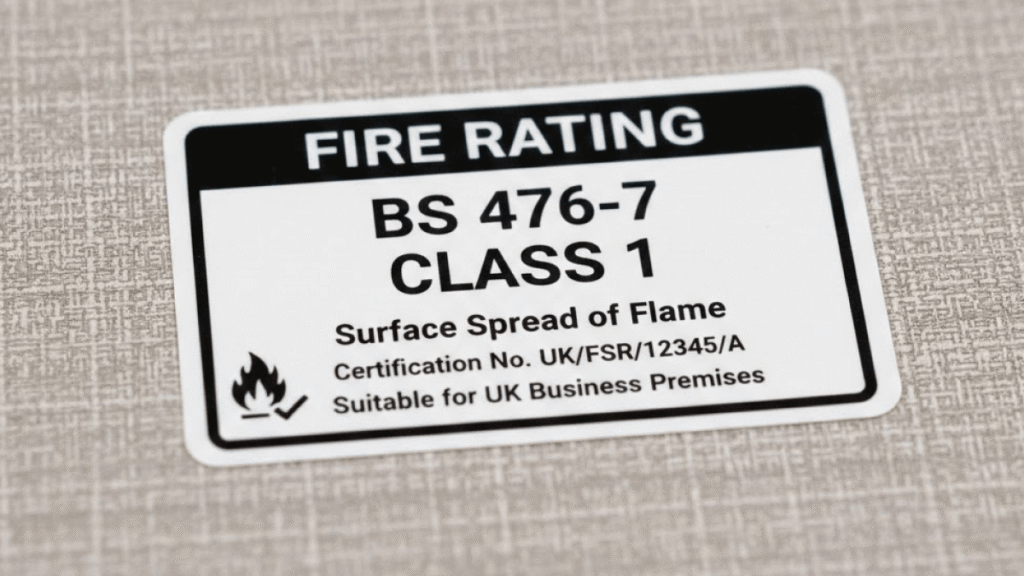
Most companies fail to achieve their business objectives. The UK fire standards do not accept every type of wallcovering material.
The Regulatory Reform (Fire Safety) Order 2005 requires all commercial buildings to undergo testing for flame spread and smoke emission properties which includes corridors and stairwells and reception areas.
- Paint: Most commercial-grade paints are Class O or Euroclass B-s1,d0 compliant when applied correctly.
- Wallpaper: Must carry a fire rating certificate (e.g., BS 476-7 or EN 13501-1). Standard residential wallpaper is not suitable for commercial use.
Critical Insight: Using non-compliant wallpaper can invalidate your business insurance and breach HSE guidelines. Always request product test data from your supplier.
Our commercial painting regulations guide shows that documentation serves as a legal safeguard which goes beyond being an optional requirement.
Cost Comparison: Short-Term vs. Long-Term Value
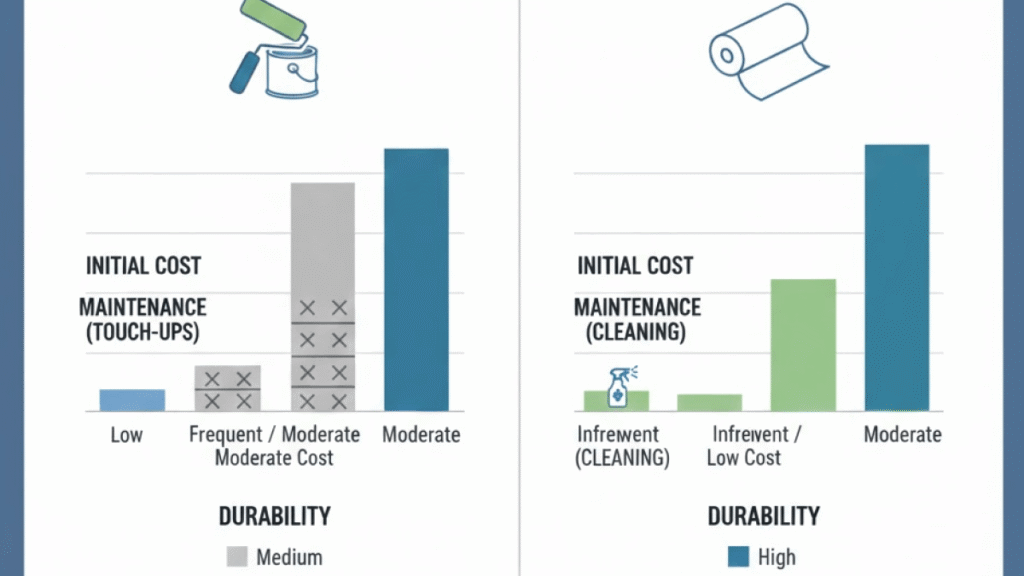
| Factor | Paint | Wallpaper |
| Initial Cost | £25–£40/m² (labour + materials) | £35–£70/m² (premium vinyl + installation) |
| Lifespan | 5–10 years | 3–7 years |
| Maintenance | Low (spot cleaning, touch-ups) | High (no spot repair; full strip/rehang) |
| Change Flexibility | Easy colour updates | Full removal required |
Most Surrey SMEs find paint to be their best long-term investment because landlords typically want their tenants to use neutral colors when they leave the property.
Acoustics and Wellbeing
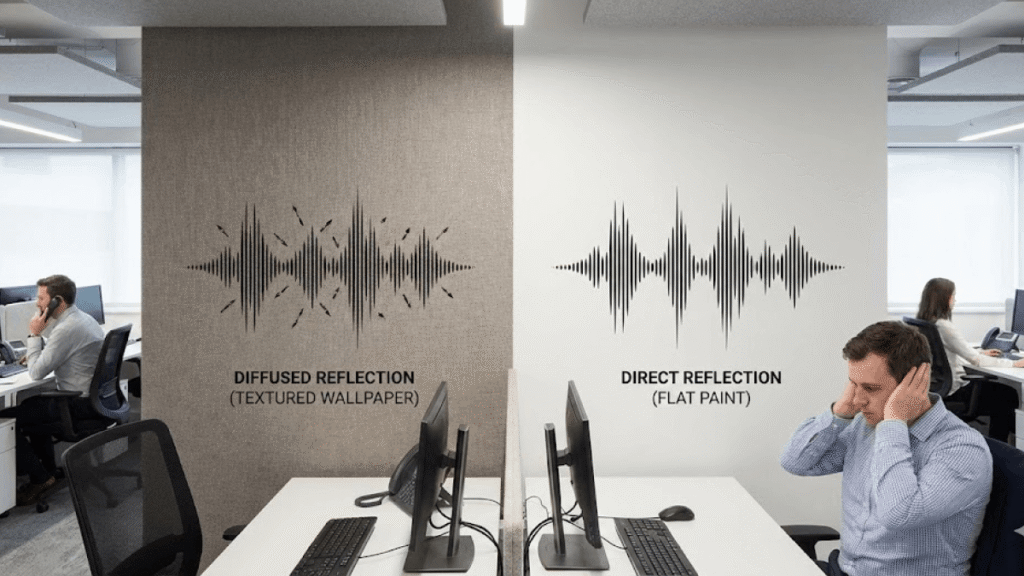
Workplaces with open-plan layouts need to install sound-absorbing materials because these elements establish spaces which protect employees from unwanted noise.
The following wallpapers show better performance than others:
- The combination of fabric-backed wallpapers and acoustic wallpapers functions to decrease sound reflections which enables people to hear better in their environment.
- The textured surfaces in the environment provide better sound wave blocking than the smooth surface of painted surfaces.
However, dedicated acoustic panels or ceiling baffles are more effective. Don’t rely solely on wall finishes for noise control.
Low-VOC paints create an environment with better air quality which stands as a vital requirement of the Health and Safety at Work etc. Act 1974 because it demands employers to provide staff with an environment that supports their health.
Practical Recommendations by Space Type
Reception and Lobby
- Best choice: Painted walls with a feature wallpaper panel behind the desk.
- Why: Projects professionalism while adding brand flair; easy to maintain.
Meeting Rooms
- Best choice: Washable matte or soft-sheen paint.
- Why: Resists marker stains from whiteboards; glare-free for video calls.
Breakout Zones
- Best choice: Durable paint with optional textured wallpaper on one wall.
- Why: Withstands coffee spills and casual use; adds visual interest.
Corridors and Stairwells
- Best choice: Commercial-grade paint only.
- Why: Must comply with fire escape regulations; high durability needed.
When to Hire Professionals
Professional installation works as the key to success for your Surrey office project because wallpaper and paint need expert handling to achieve optimal results.
- The decorators prepare surfaces correctly because this step determines how well the paint will stick to the surface.
- The team performs fire rating checks and VOC testing to verify that all materials meet the required standards.
- They work outside business hours to minimise disruption—as shown in our recent office revamp project.
Our team provides full documentation, including COSHH assessments and product data sheets, so you stay compliant and protected.
Final Thoughts
You need to find the perfect solution which matches your specific needs because no one solution works for every situation. Businesses in Surrey mainly prefer paint for their durability needs and compliance requirements and cost savings, but wallpaper works well as an accent choice in specific controlled areas.
Your workspace will create an impressive experience for clients when you combine stylish design elements with operational layout and legal standards which promote staff health and build an enduring workspace.