
 mainwp
23 Feb
mainwp
23 Feb
How Painting & Decorating Can Boost Your Energy Rating
Most homeowners who want to enhance their house energy efficiency usually think about installing loft insulation and double glazing and new boilers. The majority of people fail to recognize that professional painting and decorating services will enhance your Energy Performance Certificate (EPC) rating.
British designers, who do not have insulation installation skills, help builders choose finishing materials, colours and surface treatment methods. This protects buildings from temperature fluctuations, reduces heat loss and helps them meet British energy efficiency requirements.
Our team at Surrey Painters possesses direct knowledge about how smart home decoration decisions lead to homes which become more comfortable and energy-saving.
The guide proves through scientific evidence that painting and decorating activities will raise your home’s energy rating during your upcoming renovation project.
The Link Between Decor and Energy Efficiency
Your home receives an EPC rating between A and G because it shows how much power your house needs to operate its heating system and lighting fixtures and water heating equipment.
The main advantages of cavity wall insulation work together with reflective surfaces and airtight construction and thermal paint application to create better home comfort while reducing your energy costs.
The UK Government uses EPC methodology to assess building material efficiency and sunlight absorption which helps them determine the functional purpose of home decorations beyond their visual appeal.
The Sustainable Energy Academy conducted a 2023 study which demonstrated that light-colored low-emissivity interior finishes reduce heating needs by 5 percent in uninsulated period homes. In certain situation, this can improve the rating from E to D.
1. Seal Gaps and Improve Airtightness
The most basic energy-saving action which yields strong results involves blocking air leaks that enter through windows and doors and around skirting boards and ceiling joints which most people overlook during their home decoration process.
The system provides three main benefits which include prevention of heat loss during winter and it stops cold air from entering the building and it decreases heating requirements for older homes by about 20 percent according to the Energy Saving Trust.
What to Do:
- You must seal all gaps before painting starts by applying a flexible acrylic decorator’s caulk.
- You should apply expanding foam to seal big spaces but you need to trim this foam before you start painting.
- You must check all window frames for complete sealing especially around the sash boxes.
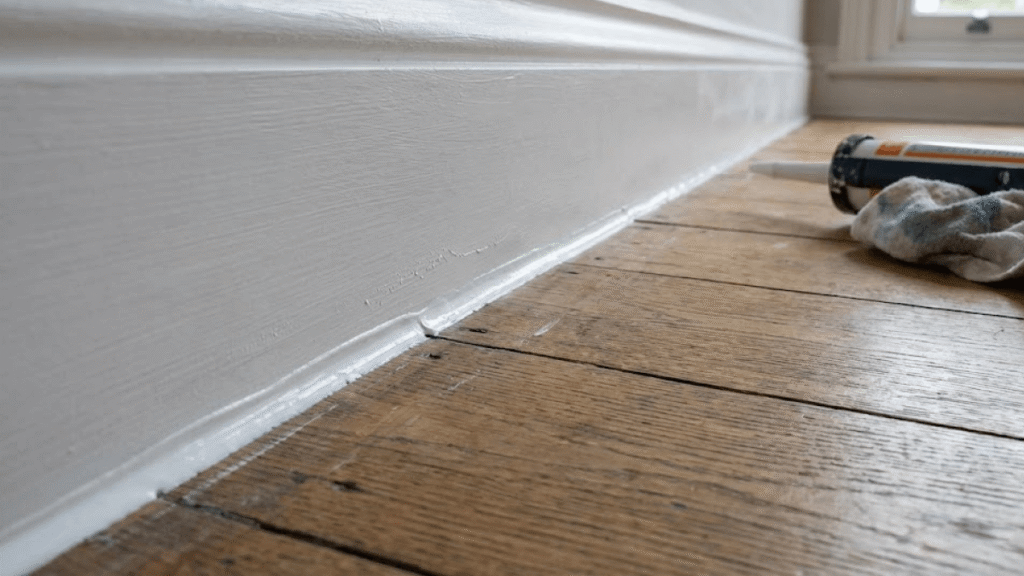
The Building Regulations require Part L (Conservation of Fuel and Power) to establish proper airtightness standards which apply to both new construction projects and building refurbishment work.
We offer wooden window painting services which include frame inspections and sealing procedures to protect historic features while stopping heat from escaping through the windows.
2. Choose Light, Reflective Interior Colours
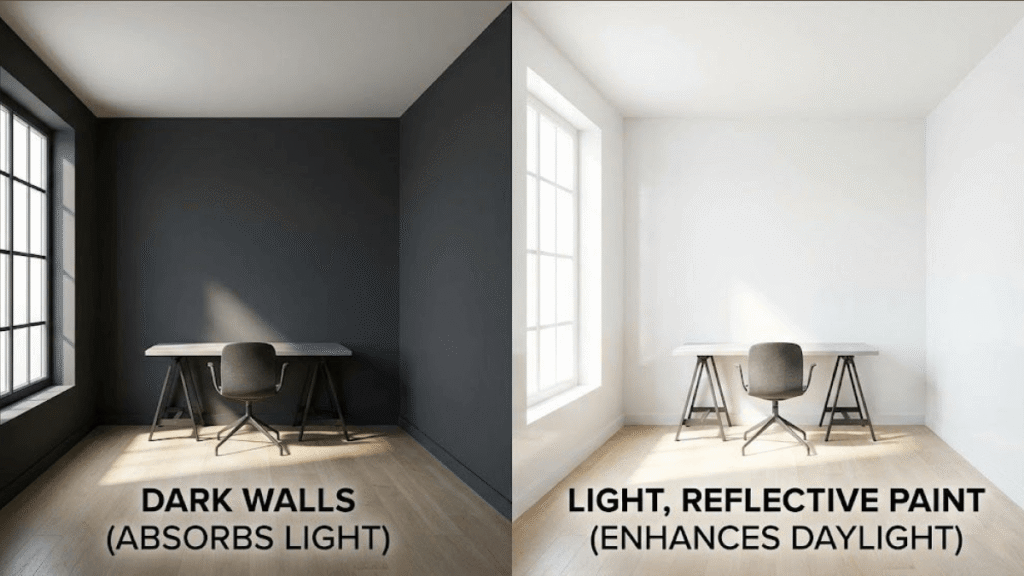
Dark walls absorb heat; light walls reflect it. The sunlight that reaches Victorian terraces and north-facing Surrey homes makes pale matte finishes the best option because they reflect natural light into the room which decreases the need for electric lighting during the day.
Best Choices:
- Soft whites, warm greys, and pale earth tones
- Matt or soft-sheen emulsions with high light reflectance values (LRV >70%)
Avoid high-gloss finishes on large walls-they create glare without improving luminance.
3. Use Thermal or Insulating Paints (With Realistic Expectations)
Marketing campaigns have aggressively promoted “thermal paint” but does this product actually deliver on its promises?
The standard insulating paint products deliver under 0.1 m²K/W R-value which falls short of the insulation performance from cavity fill materials that provide 2.5 or higher R-value. The following products deliver some level of advantage to users:
- The surface heat transfer rate decreases by 10–15% when users apply Ceramic microsphere paints which include Thermilate and Hy-Tech products.
- Exterior thermal renders (like KEIM Soldalit) help stabilise wall temperatures
Insulation stands alone as these products function as supplementary options which help homeowners who want to preserve their solid-wall period houses but cannot install internal insulation.
Thermal paint marketers must avoid making impossible claims because the Advertising Standards Authority has started to enforce stricter rules against their exaggerated marketing techniques. Use BBA-certified products which come with independent test data as your solution.
4. Upgrade Exterior Finishes to Reduce Heat Loss
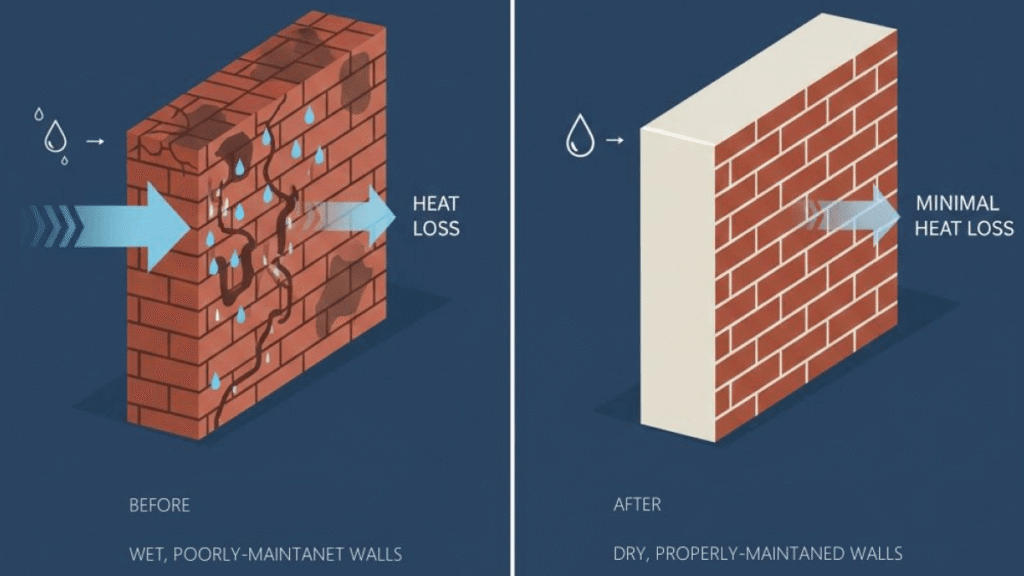
The exterior design of your home functions as the main factor which determines its ability to control heat effectively. The weather in Surrey tends to be wet so builders need to use breathable render and paint systems which they should keep in good condition to stop water from entering because moisture causes insulation to degrade and heat to escape through conduction.
Key Actions:
- The process of repairing render cracks will safeguard walls from wind-driven rain penetration.
- The microporous masonry paint enables vapour to escape which prevents interstitial condensation.
- The process of painting south-facing walls requires light colors to block summer heat from entering the building.
Our guide for Surrey climate shows you which exterior paint systems will defend your home against both weather damage and temperature shifts.
Fact Check: Wet brickwork conducts heat up to 3x faster than dry masonry (University of Bath, 2022). Proper wall painting methods protect your walls from moisture damage which helps your home maintain its temperature more effectively.
5. Support Solar Gain with Strategic Glazing Treatments
The window decoration process allows homeowners to create their own passive solar heating system.
- Light, unlined curtains should block windows during winter because they let sunshine through to warm the room.
- Avoid dark roller blinds on south-facing windows
- The white paint on the window reveals helps the room become brighter through its reflective power.
Summer requires external shading solutions such as awnings because dark interior finishes will function as heat traps.
6. Prepare for Future EPC Requirements
The UK government has set a plan to require all rental properties to achieve an EPC C rating before 2025 when new tenants start their leases. All current rental properties will require these standards to follow after 2028.
Property owners preparing to sell or rent should act now. While painting alone will not raise a home’s rating from G to C, it supports other measures such as insulation and heating upgrades, ensuring the building is airtight, dry, and optimised for heat retention.
The Energy Efficiency (Private Rented Property) Regulations 2015 require landlords to spend up to £1,500 for “cost-effective” property enhancements. The two most important actions which cost little money but produce major results include draught-proofing and reflective finishes.
When to Involve a Professional Decorator
Homeowners who want to complete basic sealing and painting tasks can do so but they should hire professionals when working on period homes or complicated projects.
- The professionals demonstrate their ability to find hidden draught paths.
- The team selects breathable products which follow rules to apply on their solid wall surfaces.
- The team works with insulation installers to create smooth outcomes.
Surrey Painters applies energy-saving methods to all their work because they seal sash boxes and pick low-VOC paints with high reflectance which achieve both beauty and energy-saving targets.
Summaries
Painting and decorating may not replace a new boiler-but they’re far from superficial. Smart finishes develop into an effective home energy performance system because they enhance air sealing and control sunlight exposure while protecting walls from moisture and preserving consistent temperatures.
Surrey contains numerous houses which were built before modern insulation standards came into existence so these details become essential. So before you repaint, ask: Could this refresh also help me save energy? The right method will produce positive results.