
 mainwp
3 Apr
mainwp
3 Apr
Decorating a Listed Building in Surrey
A Surrey listed building owner becomes eligible for a special ownership status yet must handle the full range of duties which come with it. The historic properties which exist in Guildford and Epsom demonstrate England’s architectural evolution yet their status as protected buildings requires owners to follow strict rules when making any changes to their properties.
Surrey Painters works with listed building owners to protect their home features while delivering painting services which maintain architectural integrity and meet all necessary standards. This guide will provide you with information about the legal system and material needs and the required steps which you must follow before you start painting.
Understanding Listed Building Status in England
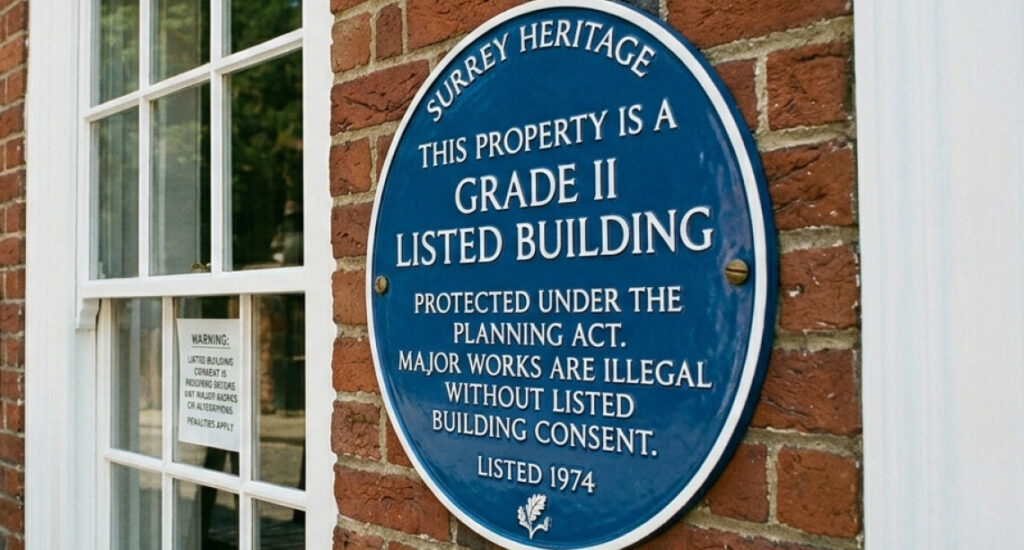
The Planning (Listed Buildings and Conservation Areas) Act 1990 protects buildings which possess special architectural or historic value through its listed building designation system. There are three grades:
- Grade I: Exceptional interest (2.5% of listed buildings)
- Grade II: Particularly important (5.8%)
- Grade II: Of special interest (91.7%)
Most Surrey listed homes fall into Grade II-the most common category, but still subject to full legal protection.
Fact Check: Historic England estimates there are over 400,000 listed buildings in England, with Surrey alone home to more than 8,000 protected structures.
Legal Requirements: Listed Building Consent
When Do You Need Consent?
Listed Building Consent (LBC) serves as a separate approval process which requires permission for any building alterations that change the structure’s character including interior painting which affects historic features.
You need LBC for:
- Removing or altering original cornices, panelling, or fireplaces
- Painting over exposed timber beams or brickwork that was previously bare
- Changing window colours (especially if replacing or repainting sash windows)
- Installing new wallpaper that requires structural changes
Warning: Carrying out unauthorised works to a listed building is a criminal offence punishable by unlimited fines or up to two years in prison.
When Consent May Not Be Required
Minor redecoration using like-for-like materials in non-significant areas (e.g., repainting a modern kitchen extension in the same colour) may not require consent-but always check with your local authority first.
Choosing Appropriate Materials for Historic Fabric
Why Modern Paints Can Damage Listed Buildings
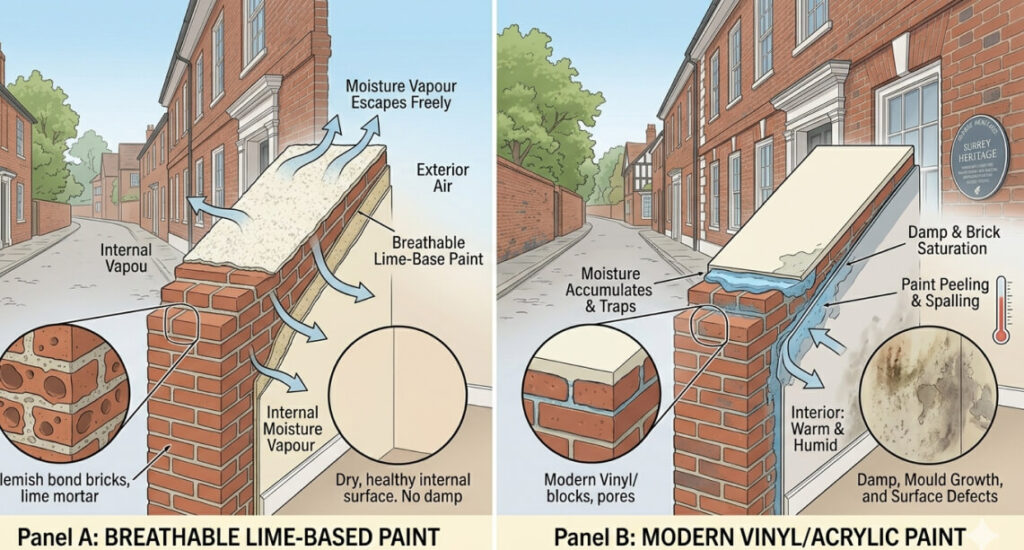
Standard vinyl emulsions and acrylic paints function as barriers which block moisture from leaving solid walls while this causes multiple issues to develop:
- Damp penetration and salt efflorescence
- Timber rot in window frames and beams
- Spalling brickwork and crumbling plaster
The Surrey region faces this issue because its wet weather affects buildings which have solid walls that date back to before 1920.
Recommended Paint Systems for Listed Properties
| Surface Type | Recommended Finish | Why |
| Lime plaster walls | Claypaint or limewash | Breathable, allows moisture vapour transmission |
| Exposed timber beams | Natural oil or breathable stain | Preserves character, prevents moisture trapping |
| Original sash windows | Linseed oil paint or microporous acrylic | Flexible, allows wood to expand/contract |
| Stone or brick (interior) | Lime wash or mineral paint | Compatible with historic fabric |
Working with Your Local Conservation Officer
Before starting any work, contact your local council’s conservation team. Surrey has several local authorities-each with its own approach:
- Guildford Borough Council
- Woking Borough Council
- Mole Valley District Council
- Elmbridge Borough Council
The officer may:
- Request samples of proposed colours and materials
- Require a Statement of Significance explaining the building’s historic value
- Suggest alternative approaches that better preserve character
Regulatory Note: Under the National Planning Policy Framework (NPPF), local authorities must “preserve the historic environment” and give “great weight” to the significance of heritage assets.
Common Decorating Mistakes in Listed Buildings
1. Painting Over Original Features
Homeowners tend to hide historic building features which include exposed brickwork and timber beams and decorative plasterwork that give their property its unique character. The process of painting these features creates permanent damage because it becomes impossible to restore them to their original state.
2. Using Non-Breathable Sealants
The moisture gets trapped in solid walls because of silicone and acrylic sealants which people use around their windows and skirtings. Use lime-based or breathable acrylic sealants instead.
3. Ignoring Underlying Damp Issues
As detailed in our guide on damp-related paint problems, painting over damp without fixing the source causes rapid failure and can damage historic fabric.
4. Choosing Inappropriate Colours
The selection of colors proves to be a personal choice yet conservation officers will oppose the use of modern shades which include bright neon colors on Georgian buildings and any colors which do not match the architectural period of the structure.
When to Hire a Specialist Decorator
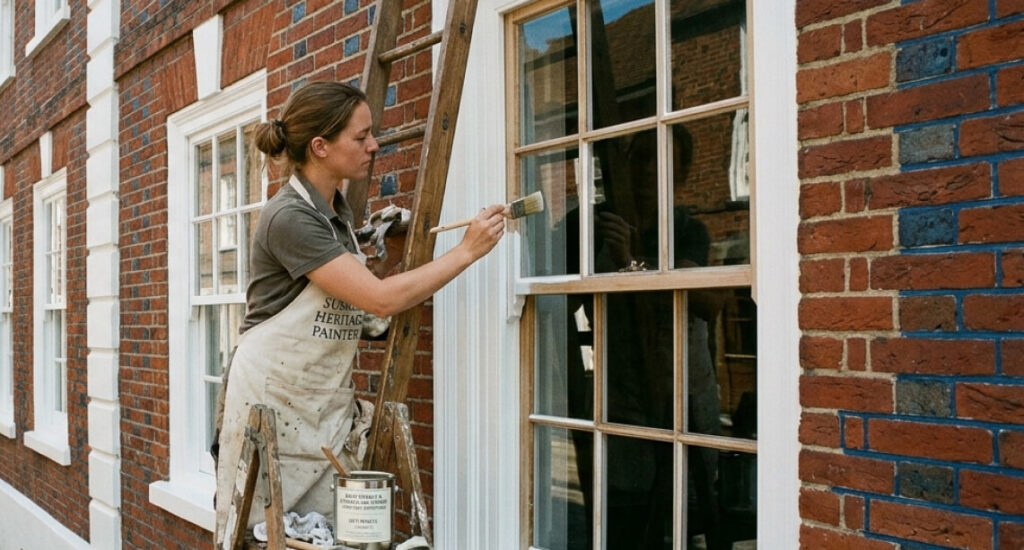
You need professional assistance when you want to paint an entire listed building because minor touch-ups require only basic knowledge. At Surrey Painters, we:
- Consult with conservation officers on your behalf
- Use heritage-approved, breathable materials
- Employ traditional techniques (e.g., hand-brushing sash windows)
- Provide full documentation for LBC applications
Our recent project on a Grade II-listed Victorian villa in Epsom involved restoring 18 original sash windows using linseed oil paint-approved by the local conservation officer for its authenticity and breathability.
Related Reading:
Energy Efficiency and Listed Buildings
The process of protecting historical sites becomes difficult because modern energy requirements need to be fulfilled. The Building Regulations Part L exempts listed buildings from their strict energy efficiency standards but you can still work on making your building more energy-efficient.
The following methods are allowed:
- Secondary glazing serves as an alternative to maintaining the original windows instead of replacing them.
- Heavy curtains function as insulation to prevent heat from escaping your home.
- Interior walls receive protection through breathable insulating plasters which serve as their protective layer.
- Loft insulation (if not historically significant)
The following methods should be avoided:
- Cavity wall insulation (can trap moisture in solid walls)
- Non-breathable thermal paints (see our article on thermal paint myths)
- Sealing all ventilation (leads to condensation and mould)
Final Checklist Before You Paint
- Confirm whether Listed Building Consent is required
- Consult your local conservation officer
- Choose breathable, heritage-appropriate materials
- Test colours on small, discreet areas first
- Address underlying damp or structural issues
- Document all changes for future owners
Final Thoughts
The decoration process of a listed building exists to protect its heritage value instead of creating limitations. Your home will gain beauty through selection of proper materials and adherence to legal standards and professional help from skilled experts who will protect your house’s historical importance for future generations.
At Surrey Painters, we believe that the best renovations are those that honour the past while serving the present. Our team will assist you with achieving a beautiful and rule-abiding outcome whether you want to update one space or restore your entire property.