In this article
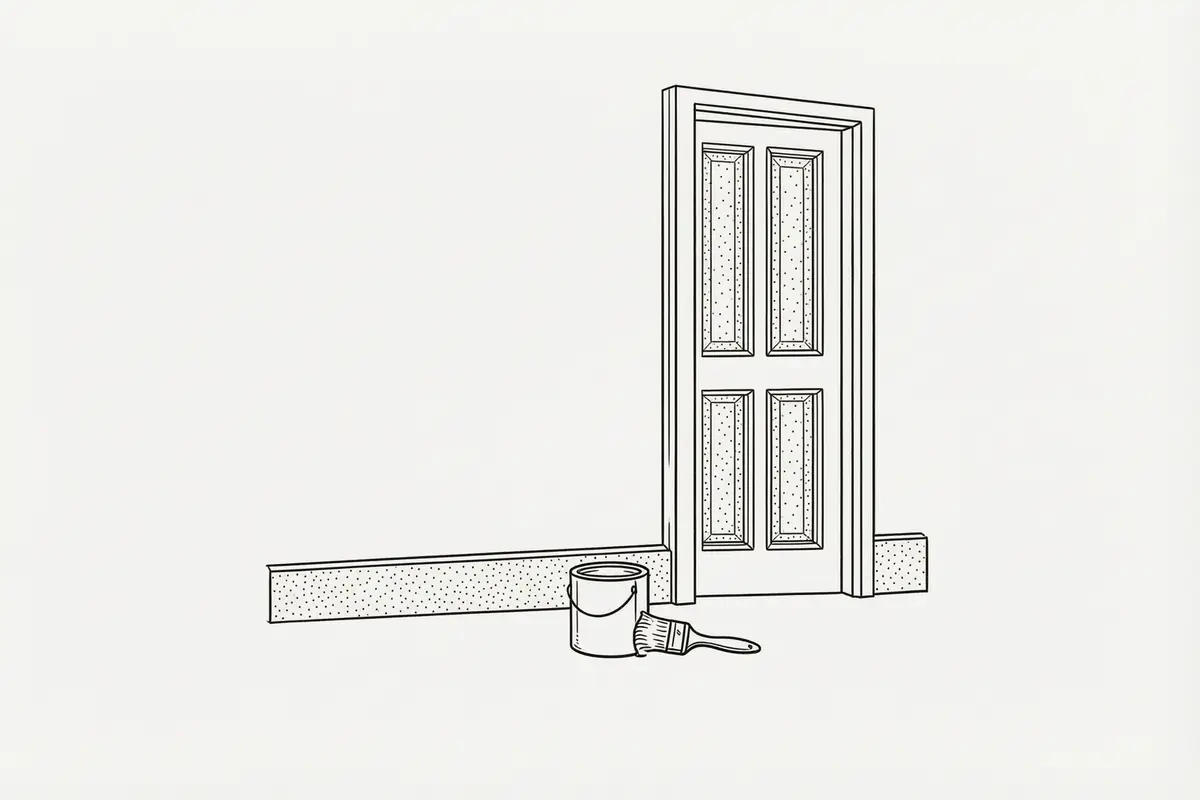
Skirting boards take more punishment than almost any other painted surface in the house: hoovers, shoes, mop handles and the odd football all find them, and a bad job shows within weeks as brush marks, chips and a dull grey cast where the white should stay bright. A finish that lasts is almost entirely preparation and the right paint.
The plain rule: clean and key the surface, fill and caulk the gaps, mask the carpet rather than fight it, and use a water-based satinwood over a sound base — two thin coats, laid off, never one thick one.
Start from the surface you have
Before you buy anything, decide which of three situations you are in, because each needs a different base: bare MDF (the standard in newer Surrey builds, usually pre-primed but raw at the cut ends and routed detail), bare softwood (the pine in older houses, which needs knotting and a full primer), or previously glossed boards in sound condition — the most common case, and the one people get wrong, because old gloss has to be keyed or the new paint peels in sheets.
The order of work in an occupied room
When we paint skirting in a room that is still being lived in, we work to a fixed sequence, and the slowness is the point. These steps are the whole job.
Step 1 — Clear and protect
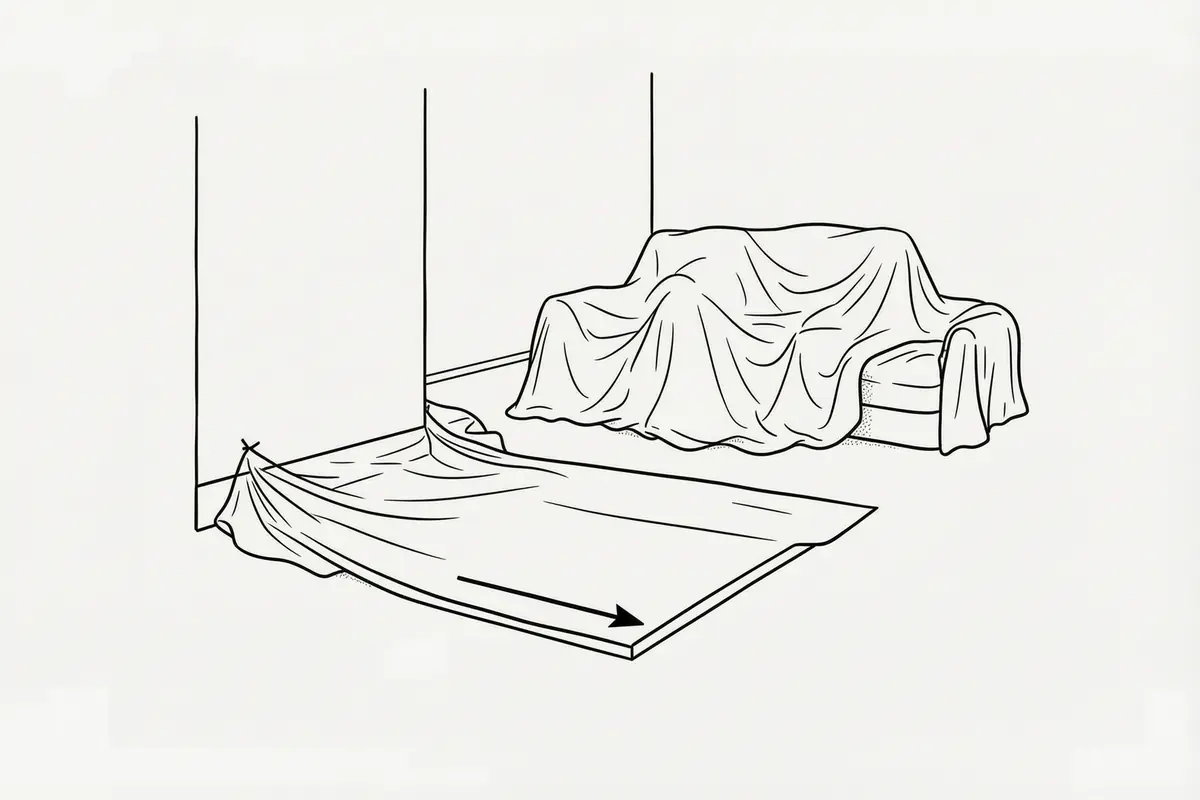
Move the furniture into the middle of the room and cover it, then run a dust sheet along each wall you are painting, tucked up to the board so no floor shows within a metre of it. Unscrew or mask anything fixed near the boards — socket faceplates, phone points, the pipe collars behind a radiator — and hoover the top of the skirting and the carpet edge, because any dust left there ends up in the paint. Allow about twenty minutes for an average room. It is done when you can walk the whole perimeter without stepping on bare floor.
Step 2 — Mask against the carpet
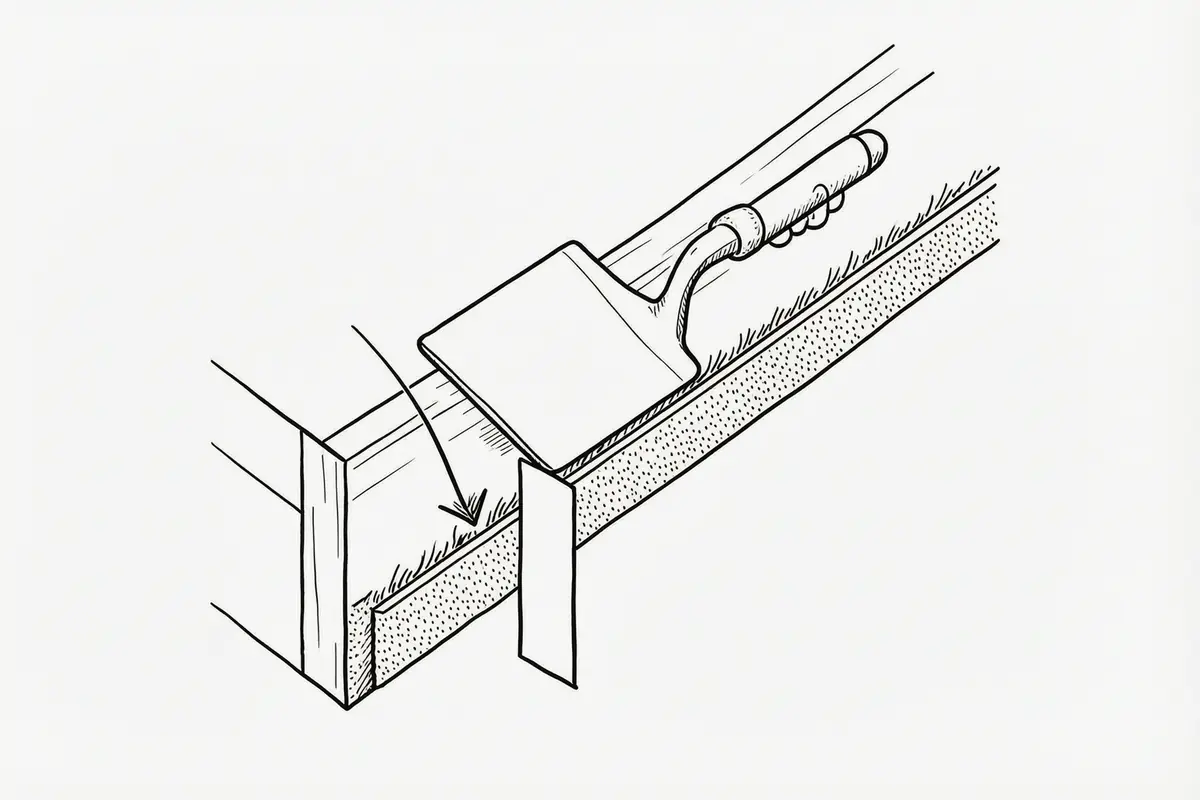
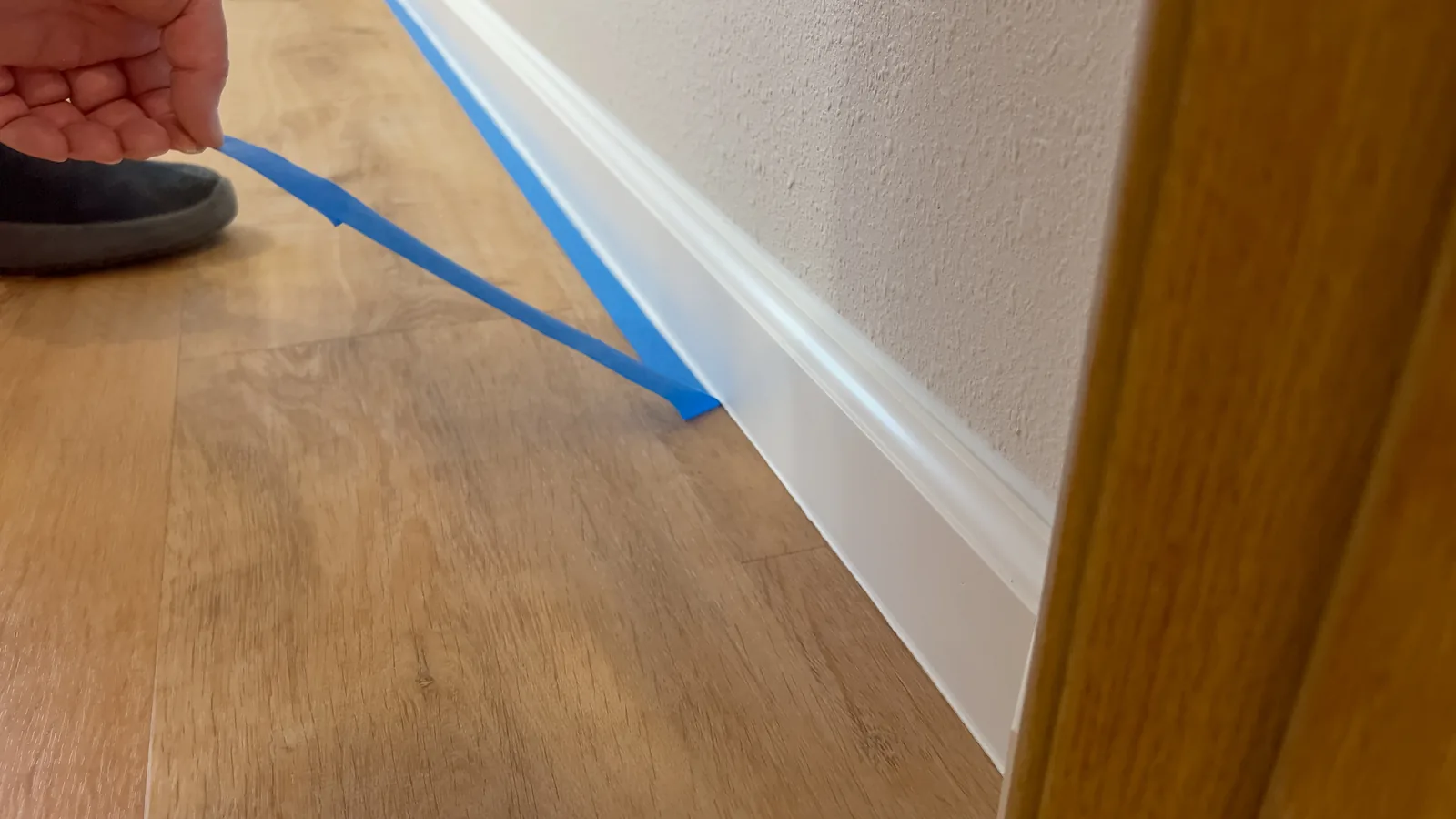
Run masking tape along the carpet edge so that it overlaps the bottom of the skirting by a finger’s width. Then take a wide filling knife, hold it almost flat, and push the overlapping edge of the tape down into the crevice between the carpet pile and the board, working along in short strokes. The tape now stands as a shield under the pile: paint cannot creep onto the carpet, and the pile springs back over the line when you are done. Tape the wall just above the board with low-tack tape for a clean top edge. Done right, no carpet fibre shows above the tape anywhere along the wall.
Step 3 — Fill and caulk the gap
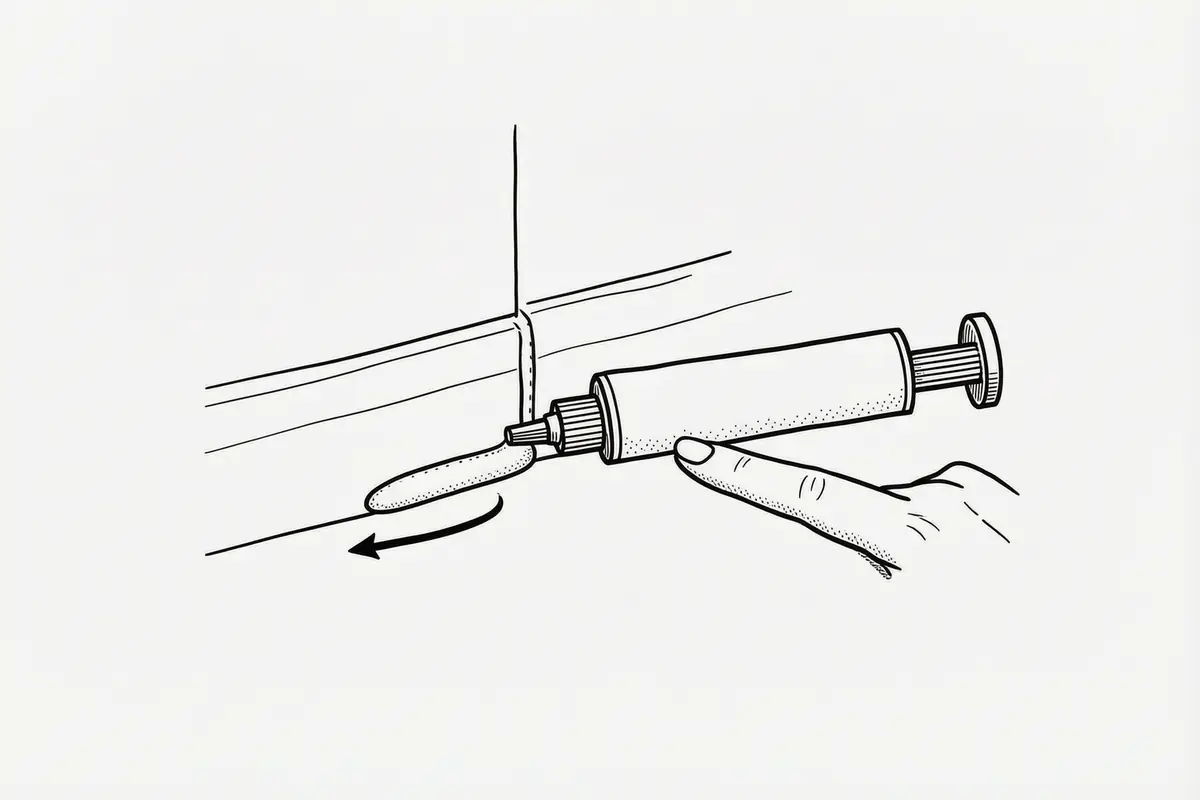
Press a fine wood filler into dents, splits and nail holes with a filling knife, slightly proud, and sand it flush with 120-grit paper once it has hardened. Then cut the nozzle of a tube of flexible decorator’s caulk at a shallow angle, and run a thin, steady bead along the joint where the board meets the wall, smoothing it straight away with a damp fingertip or a caulk tool so it sits as a small concave fillet. Leave the caulk to skin — overnight is safest — and spot-prime the filler, or it flashes through the topcoat as a dull patch.
Step 4 — Prime or undercoat
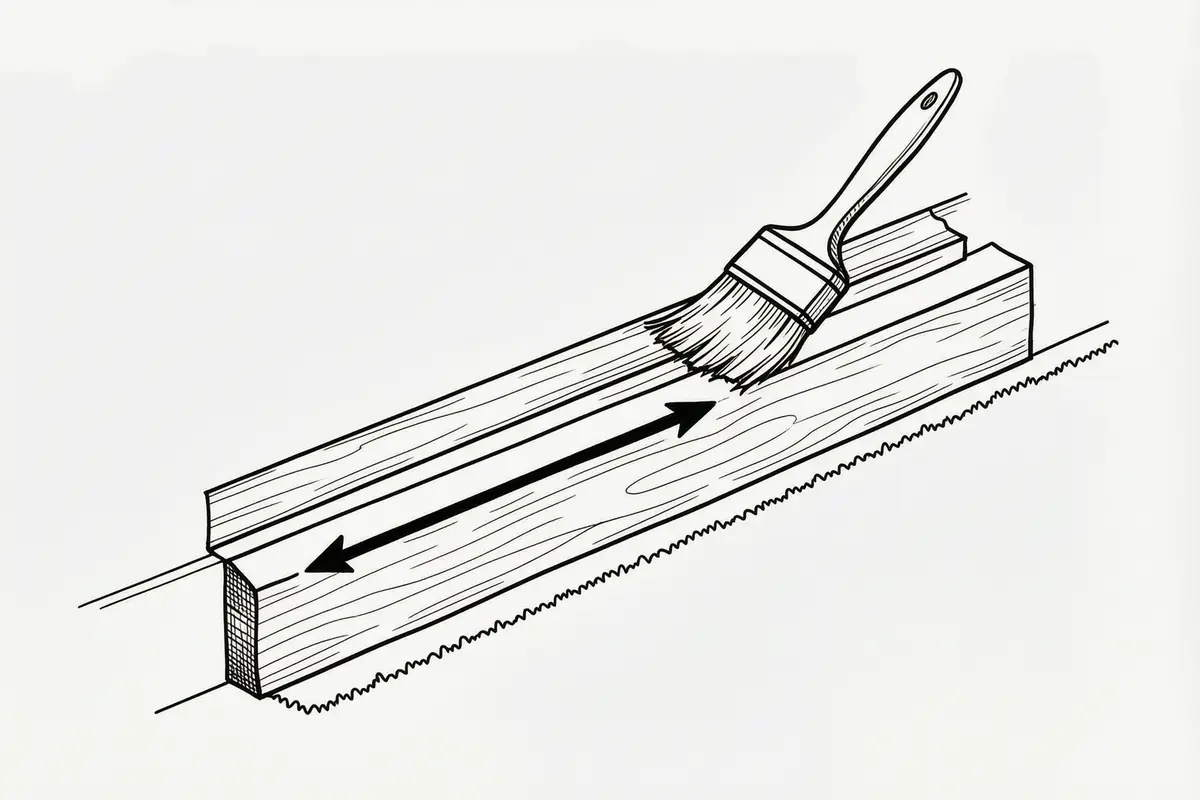
Wash the boards with sugar soap and let them dry, then key old gloss all over with 120-grit paper until the shine has gone — a missed patch is where the new paint will lift. Knot every knot on bare softwood and prime it; seal the cut ends and routed detail of bare MDF, which drink paint. Over sound, keyed gloss, brush on one coat of primer-undercoat, or go straight to a self-undercoating satinwood. Lay the coat on along the board’s length, thinly, and leave it for the time on the tin, usually two to four hours. It is ready when a light rub with the paper produces a fine white dust rather than a smear.
Step 5 — Two topcoats, laid off
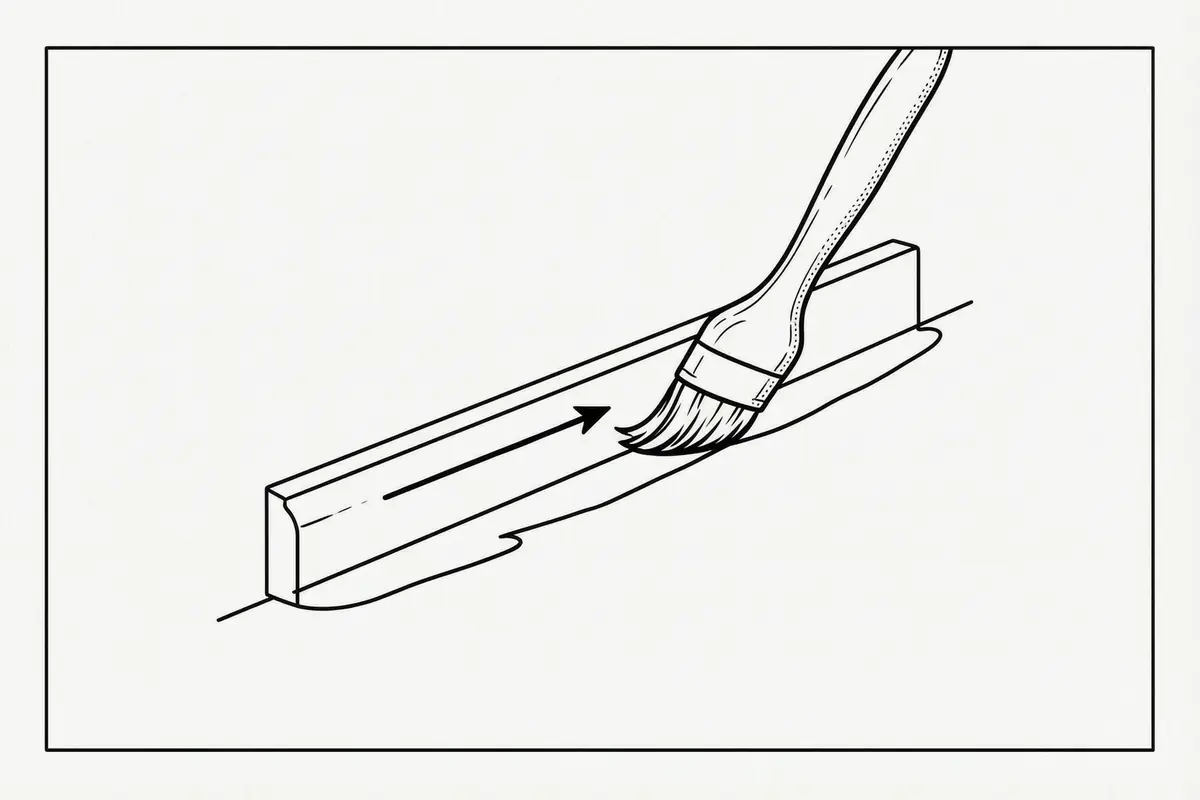
Use a 2-inch angled synthetic brush for water-based satinwood. Load it lightly, paint a section about half a metre long with short strokes to spread the paint, then finish that section with one light, unbroken stroke along the full length of the board, brushing back into the wet edge of the previous section. Move on and do not go back: the paint tacks within minutes in a warm room, and reworking it leaves ridges. Recoat after about six hours (check the tin), sanding lightly between coats with a fine paper. Pull the tape while the second coat is still slightly soft, drawing it back on itself at a shallow angle, so it does not tear a dried edge.
Masking against carpet, with or without lifting it
You do not need to lift the carpet to paint skirting well; the tucked tape in Step 2 protects the pile and leaves a clean bottom line. If the pile is too dense or too short to tuck, slip a thin plastic paint shield behind the board instead and move it along as you go. Lifting the carpet is only worth it when the gripper rods are being replaced anyway — a lifted carpet rarely goes back as tight as it came up.
Filling and caulking the gap
The junction where skirting meets the wall is where a painted room shows its age first. The house moves, the boards flex, and a hard filler cracks along that line within a season. That is why we caulk it, not fill it: decorator’s caulk stays flexible and keeps a clean line. Filler is for the board itself — dents, splits, nail holes — never for the joint, and paint brushed over caulk that has not cured crazes as it shrinks beneath, which is why the overnight wait in Step 3 is not optional.
Primer and undercoat for previously glossed timber
Over a sound, keyed gloss you do not always need a separate primer: a self-undercoating water-based satinwood can go straight on. Where the boards are tired, filled in places or going from a dark colour to white, a dedicated primer or primer-undercoat gives a more even base and stops the old colour grinning through. Our guide to how to paint over gloss covers keying and priming old gloss, and our post on undercoat versus primer explains when each is worth the extra coat.
Water-based versus oil-based satinwood
This is the choice that decides whether your white stays white. Traditional oil-based satinwood and gloss flow out beautifully and are hard-wearing, but they yellow noticeably over time, especially in rooms with little daylight, and they are slow and smelly to work with. Modern water-based satinwood stays brilliant white, barely smells, and dries fast enough to recoat the same day.
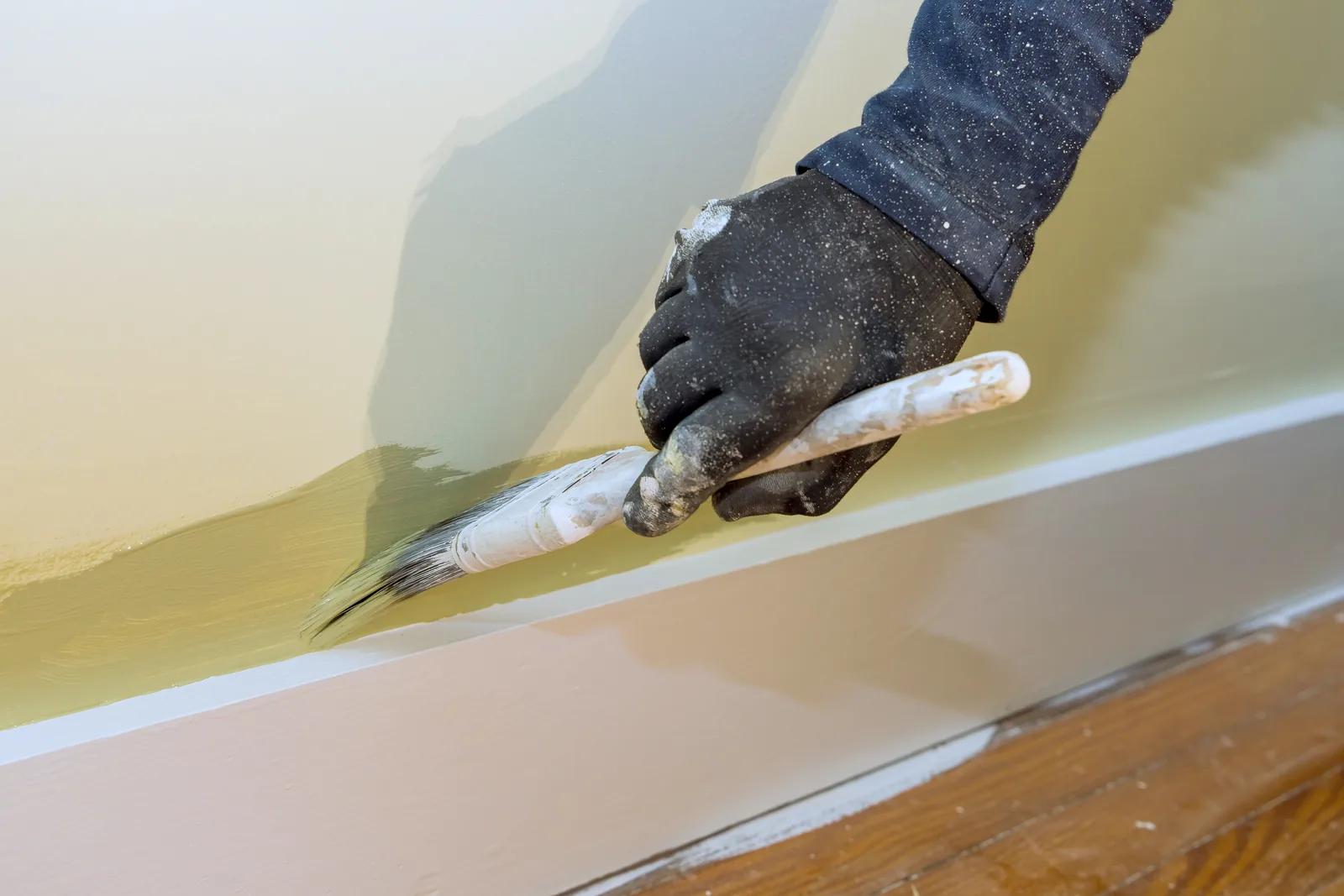
A water-based satinwood such as Dulux Trade Diamond Satinwood is our default for skirting. It is recoatable in about six hours, covers up to 12 square metres per litre, and a normal finish is two full coats, brushed, rolled or sprayed. Choose oil-based only where you want the deepest, most self-levelling sheen on a special piece, and accept that whites will warm over time. Whichever you pick, plan for two topcoats; one coat almost never gives an even film. For a whole-house refresh our interior painters handle the woodwork as part of the job.
The mistakes that leave brush marks and yellowing
The same handful of faults comes up again and again, and every one traces to a skipped step or a rush.
- Overworking the paint. Water-based satinwood begins to tack within minutes in a warm room. Brushing back and forth after it has started to set drags the surface and leaves ridges. Lay off each section once, then leave it alone.
- One thick coat. A thick coat sags, runs and takes an age to dry, and still covers worse than two thin ones.
- The wrong brush. Water-based paint needs a synthetic-bristle brush; natural bristle soaks up water, swells and drags. A 2-inch angled brush is right for skirting.
- Painting over wet caulk. Paint brushed over caulk that has not cured crazes along every board.
- Oil-based white in a dark room. Oil-based satinwood and gloss yellow fastest where there is little daylight, so a north-facing hallway is the wrong place for it.
Frequently asked questions
Do you need to sand skirting boards before painting?
Yes, lightly. If the boards are previously glossed, dull the whole surface with 120-grit paper so the new paint has a key; any shine left behind is a spot where the paint can lift. Bare or filled patches get sanded smooth and spot-primed. Skipping the sanding is the single most common cause of paint peeling off skirting.
Can you paint skirting boards without lifting the carpet?
You can. Masking tape is run along the top of the board so it overlaps slightly, the carpet pile is pulled back with a filling knife, and the overlapping tape is tucked into the crevice between carpet and board. The pile springs back over the tape, so paint cannot reach the carpet, and the board is painted in place.
What is the best paint for skirting boards?
A water-based satinwood is the best all-round choice: it stays white, is hard-wearing and dries fast enough to recoat the same day. Gloss is harder-wearing but yellows and shows every ripple. Oil-based satinwood and gloss yellow over time and are slow and smelly, so we reserve them for special pieces where the deepest sheen matters.
Does old skirting paint contain lead?
It can, if the house predates about 1980. The Health and Safety Executive says to strip old paint only where it is flaking, chipping or a risk to children, and to remove it with a chemical stripper and wet abrasive paper rather than dry sanding, wiping the debris up with a damp cloth and bagging it. If the paint is sound, key it with wet abrasive paper and paint over it.