In this article
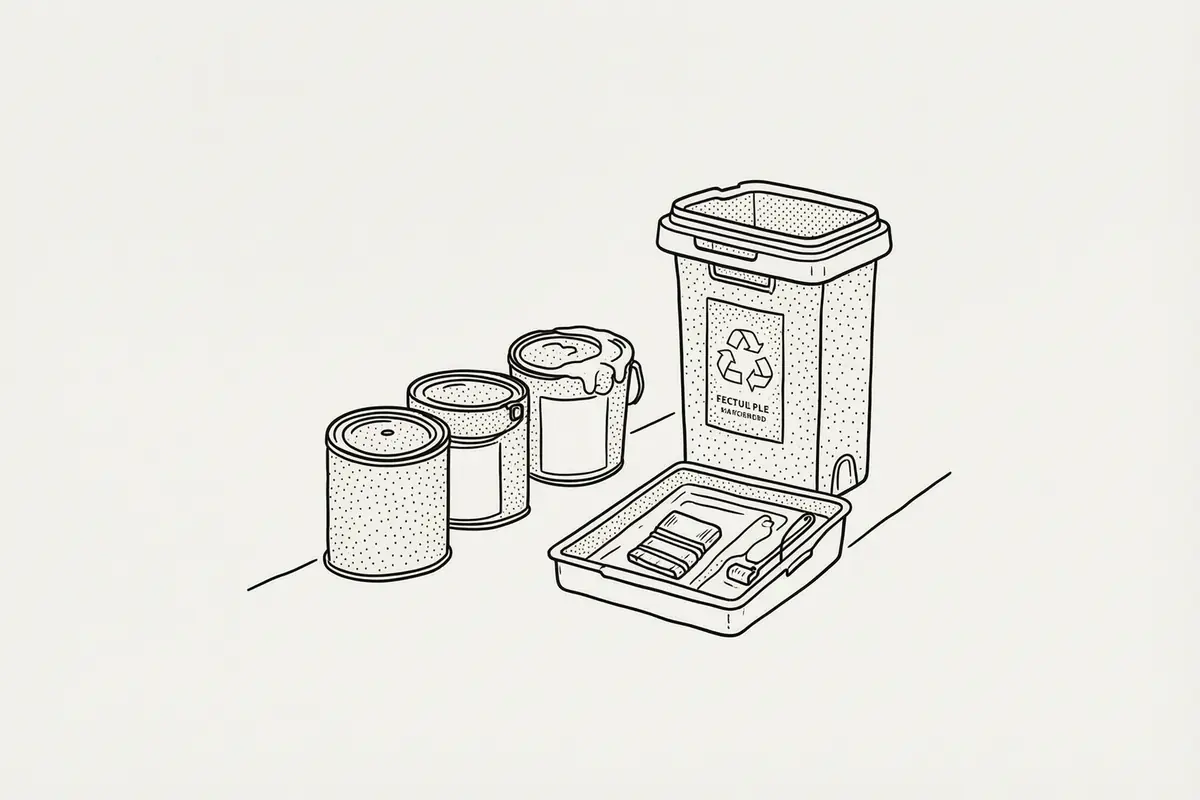
Every decorating job ends the same way: a row of part-used tins, a bucket of wallpaper paste and a pile of empty cans, and no clear idea what to do with any of it. The right thing to do depends entirely on what kind of paint is in the tin, and Surrey’s recycling centres treat each type differently.
The rule in Surrey is short. Water-based emulsion goes to your nearest community recycling centre; solvent-based and oil-based paint goes in the chemical waste container on the same site; and wallpaper paste is dried out and put in the bin. Sort the leftovers first, and everything else follows. If the brushes need cleaning before you get to the tins, our guide to cleaning paint brushes and rollers covers that end of the job.
Sort your paint into three piles
Before you load the car, put every tin into one of three groups, because Surrey’s recycling centres treat them differently.
- Water-based paint and emulsion. This is the tin that cleans up with water — wall emulsion, most modern satinwood and eggshell, and acrylic primer. Surrey’s community recycling centres accept this type, and nothing else.
- Solvent-based and oil-based paint. Anything that needs white spirit or brush cleaner to wash out — gloss, oil-based undercoat, some metal and wood paints. This is the one group that counts as hazardous waste, so it goes in the chemical waste container, not the general paint skip.
- Wallpaper paste. Paste is neither paint nor chemical waste; it is dried out and binned with the household waste.
Aerosol and spray cans sit outside the three piles. Even an empty can still holds pressurised propellant, so never puncture, burn or crush it. Empty aerosols go with the cans at the recycling centre, and a full or partly full one should be handed to a member of staff to place correctly.
If you are unsure which a tin is, the label tells you: anything that says “clean brushes with water” is water-based, and anything that says “use white spirit” is not. When in doubt, treat it as solvent-based and put it in the chemical waste container, because that is the safer default.
Getting rid of each type
Step 1 — Take water-based paint, or harden it first
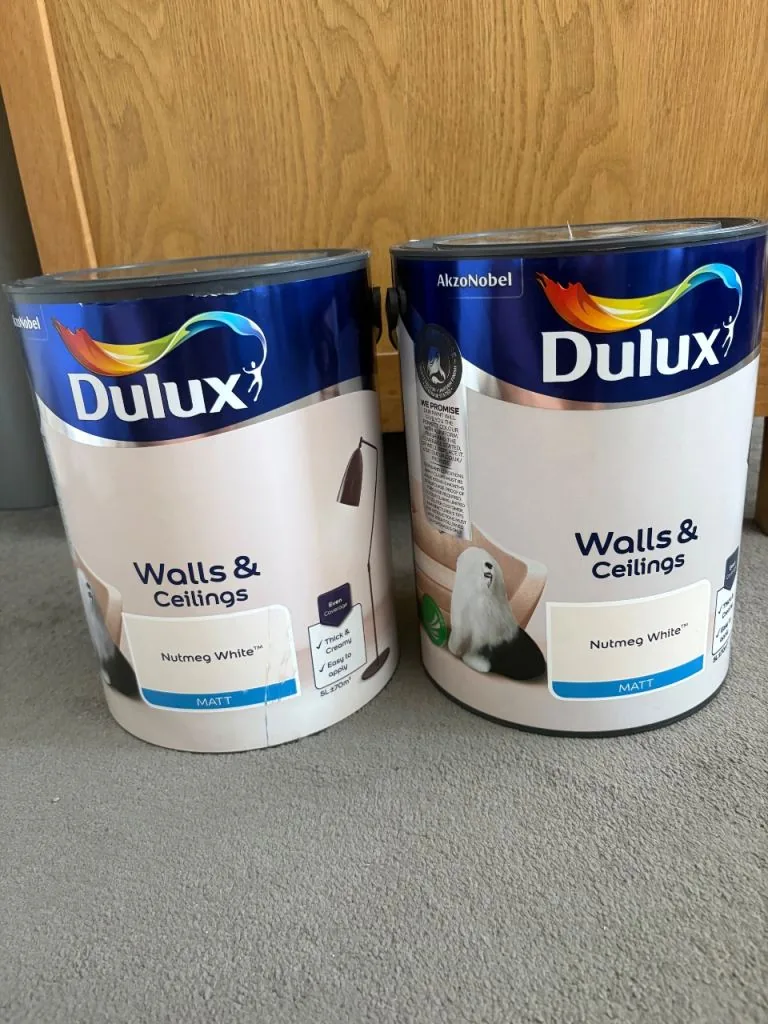
Surrey’s recycling centres accept water-based emulsion, so you can take it in the tin as it is — there is no need to harden it first. Hardening is the fallback if you would rather not carry a part-tin of liquid. If there is only a smear in the bottom, leave the lid off somewhere ventilated for a few days and it dries on its own. For a larger amount, tip in an absorbent — cat litter, sawdust, sand or shredded paper — roughly equal parts to the paint, stir it through, and leave it to set; most tins are solid within a day or two. You know it is ready when nothing moves when you tilt the tin. A full tin that has never been opened is different — do not harden it, because someone else can still use it.
Step 2 — Take solvent and oil-based paint to the chemical waste container
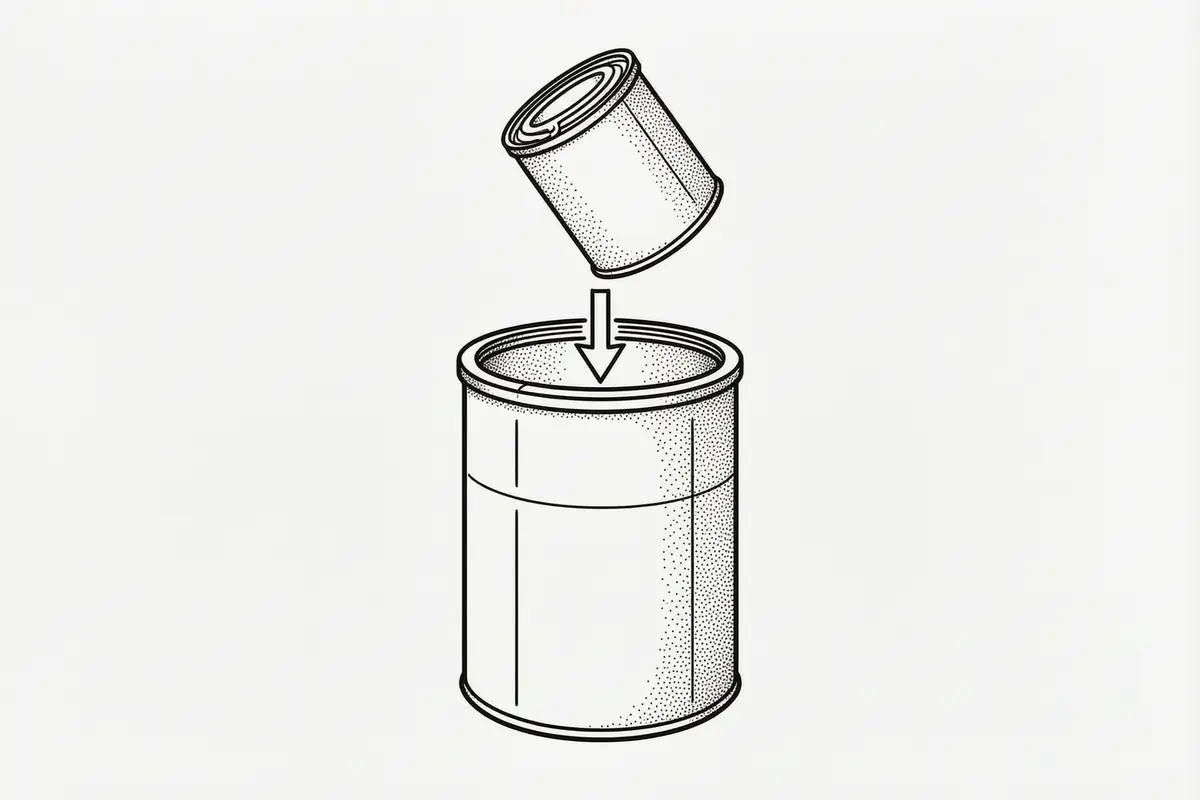
Solvent-based and oil-based paint does not harden into something harmless, so it cannot go in the general skip. Take it to your nearest community recycling centre and put it, still in its tin, into the chemical waste container — the same container that takes household and garden chemicals. If you cannot see it, ask a member of staff. Keep the lid on tight so nothing leaks in the car, and stand the tins upright. Surrey has fourteen recycling centres, from Camberley and Woking in the west to Caterham and Warlingham in the east, so there is almost always one within a short drive. If you are going in a van or with a trailer, you need a permit first — £10 a year, up to twelve visits, and vans are only accepted at nine of the fourteen centres, so check before you set off.
Step 3 — Dry out the wallpaper paste
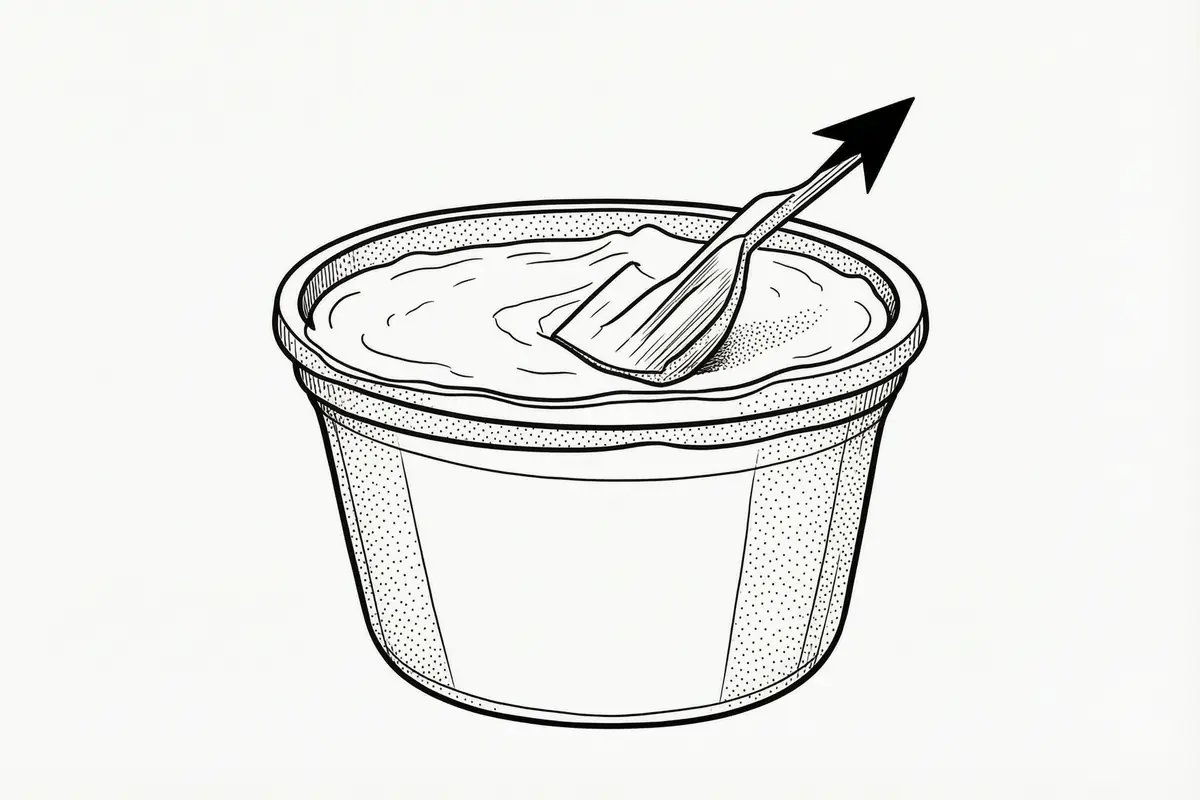
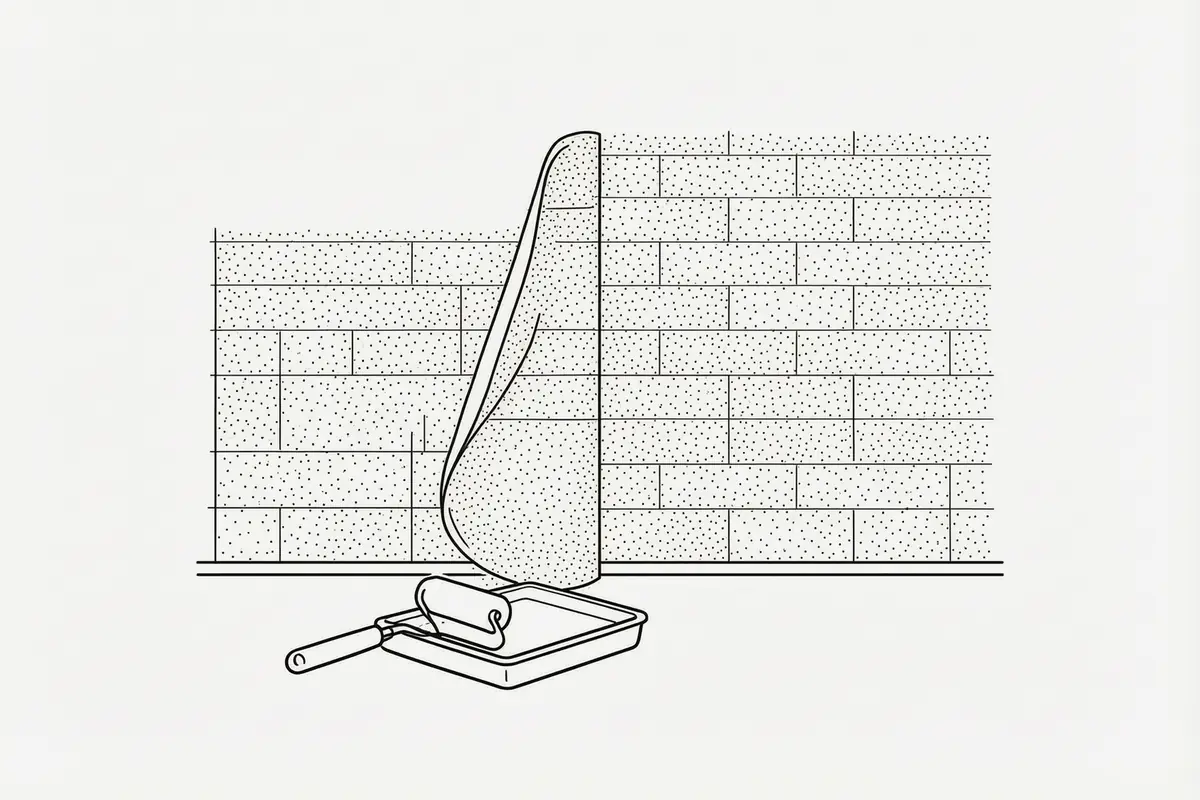
Wallpaper paste is water-based, but it does not belong in the paint skip. Leave the bucket open in a warm, dry place and let the paste dry to a solid cake; a wide, shallow bucket dries far faster than a deep one, and you can speed it up by leaving the lid off and stirring it once or twice a day; it is usually a solid cake within a day or two, quicker in a warm room. Once it has set hard, scrape it into the general household waste bin and rinse the bucket out for the recycling. Do not tip liquid paste down the sink — it will set in the trap and block the drain.
Step 4 — Empty, rinse and recycle the tins
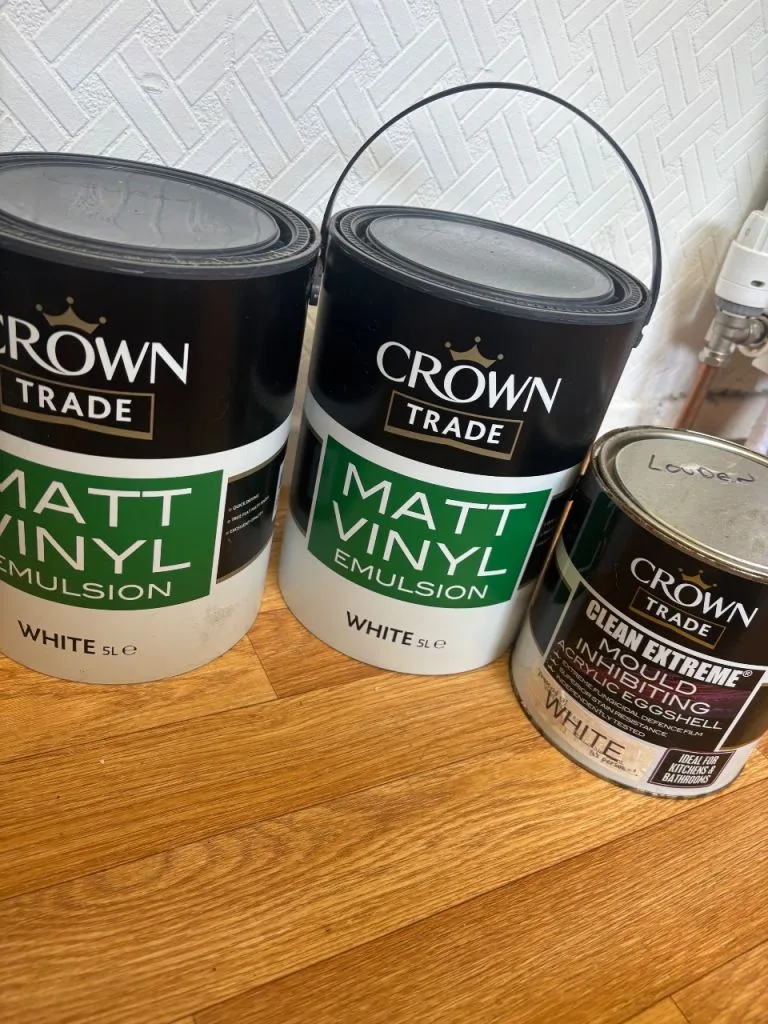
Once the paint is gone, the empty tin itself can be recycled. Rinse out any last residue so the tin is clean and dry, then put it in the metal recycling at the recycling centre. A tin that still holds wet paint is not empty, so it goes with the paint rather than the metal. If the tin held solvent-based paint, it goes in the chemical waste container with its contents, not in the metal recycling.
Give usable paint away at Guildford CRC
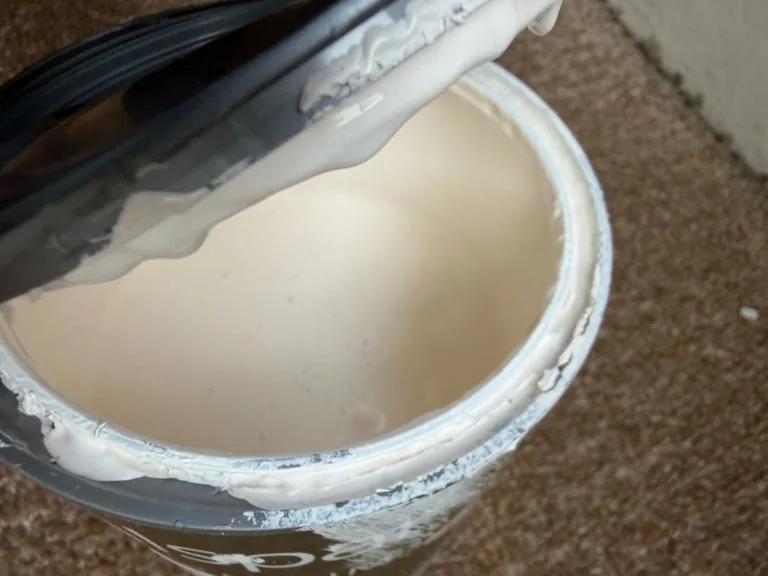
Before you harden a full or mostly full tin, consider that someone else may still want it. Surrey collects full and mostly full tins at all of its recycling centres and takes them to the Guildford community recycling centre, where any resident can pick them up free. People who take paint home are asked to donate to Macmillan Cancer Support. Outside Guildford, the national Community RePaint network does the same thing, passing leftover paint to community groups and households that can use it. It is a small thing, but a tin of perfectly good emulsion does not need to end up as solid waste when it could finish someone else’s hallway.
What a decorator does with trade waste
The rules above are for household leftovers. The moment paint is produced by a job we are paid for, it becomes trade waste, and the picture changes. Business waste cannot be taken through a community recycling centre; instead it goes to one of three waste transfer stations in Surrey — at Epsom, Guildford and Leatherhead — or through a licensed waste contractor, and the person carrying it must be registered as a waste carrier. That is why we never simply drop leftover paint at the tip the way a householder would — as a painting contractor, everything we use on a paid job is business waste. The council’s business waste page sets out the duty to make sure the waste causes no harm.
Frequently asked questions
Can I put paint in my normal household bin?
No. Liquid paint must not go in the general waste bin or down the drain. Water-based paint goes to a community recycling centre, which Surrey accepts as it is, and solvent-based paint goes in the chemical waste container. Only dried-out wallpaper paste belongs in the household bin.
How do I dispose of empty paint cans?
Rinse the tin clean, let it dry, and put it in the metal recycling at the recycling centre. If it still holds wet paint it is not empty, so it goes with the paint instead. A tin that held solvent-based paint goes in the chemical waste container with its contents.
Is old paint classed as hazardous waste?
Solvent-based and oil-based paint is, because it contains chemicals that are harmful to people or the environment if not handled properly. Water-based emulsion is not, which is why the two are collected separately at Surrey’s recycling centres.
Where can I take leftover paint in Surrey?
To any of Surrey’s fourteen community recycling centres, which run from Camberley and Woking to Caterham and Warlingham. Water-based paint goes in the paint skip, solvent-based paint in the chemical waste container, and usable full tins can be left for the giveaway at Guildford.
Can you pour wallpaper paste down the sink?
No. Liquid paste sets as it dries and will block the trap in your drain. Dry it out in an open bucket until it is a solid cake, then scrape it into the bin and rinse the bucket for recycling.