In this article
Paint on a tile is one of those small accidents that turns into a long argument with the floor. A splash from a skirting board, a drip off a roller, a whole floor painted over in the 1970s to hide the colour — each is a different job, and the tile underneath decides how you may go at it. Get the method wrong and you trade a paint stain for a scratched glaze or an encaustic pattern scrubbed out of existence.
The plain rule: glazed tiles shed paint with a plastic scraper and a little solvent; unglazed quarry and encaustic tiles soak paint in and need chemical strippers or steam, never abrasives.
Know which tile you are dealing with first
The three tiles in the title behave in completely different ways, and almost every failed attempt comes from treating one like another.
Glazed tiles — wall tiles, most modern floor tiles, the shiny ones — are fired with a glass-like surface. Paint cannot soak into them; it sits on top and grips only where the glaze is slightly rough or chipped. That is why a fresh splash wipes off and a dried drip usually pops off with a plastic scraper. The glaze is hard, but it is also thin, and a steel blade or wire wool will score it and leave a grey scratch you cannot polish out.
Quarry tiles are unglazed clay tiles, the deep red or buff squares laid in Victorian hallways, sculleries and pub floors. They are porous, so paint soaks in and grips far harder than it ever does on a glazed tile. A painted quarry floor is the hardest of the three to put right, and the answer is usually a chemical stripper left to dwell rather than scraping.
Encaustic tiles are the patterned geometric tiles of a Victorian hall or church floor, made by pressing differently coloured clays together so the pattern runs through the thickness of the tile. The pattern is not a printed surface; it is the body of the tile. That means you can never sand or grind paint off an encaustic tile without cutting into the pattern itself.
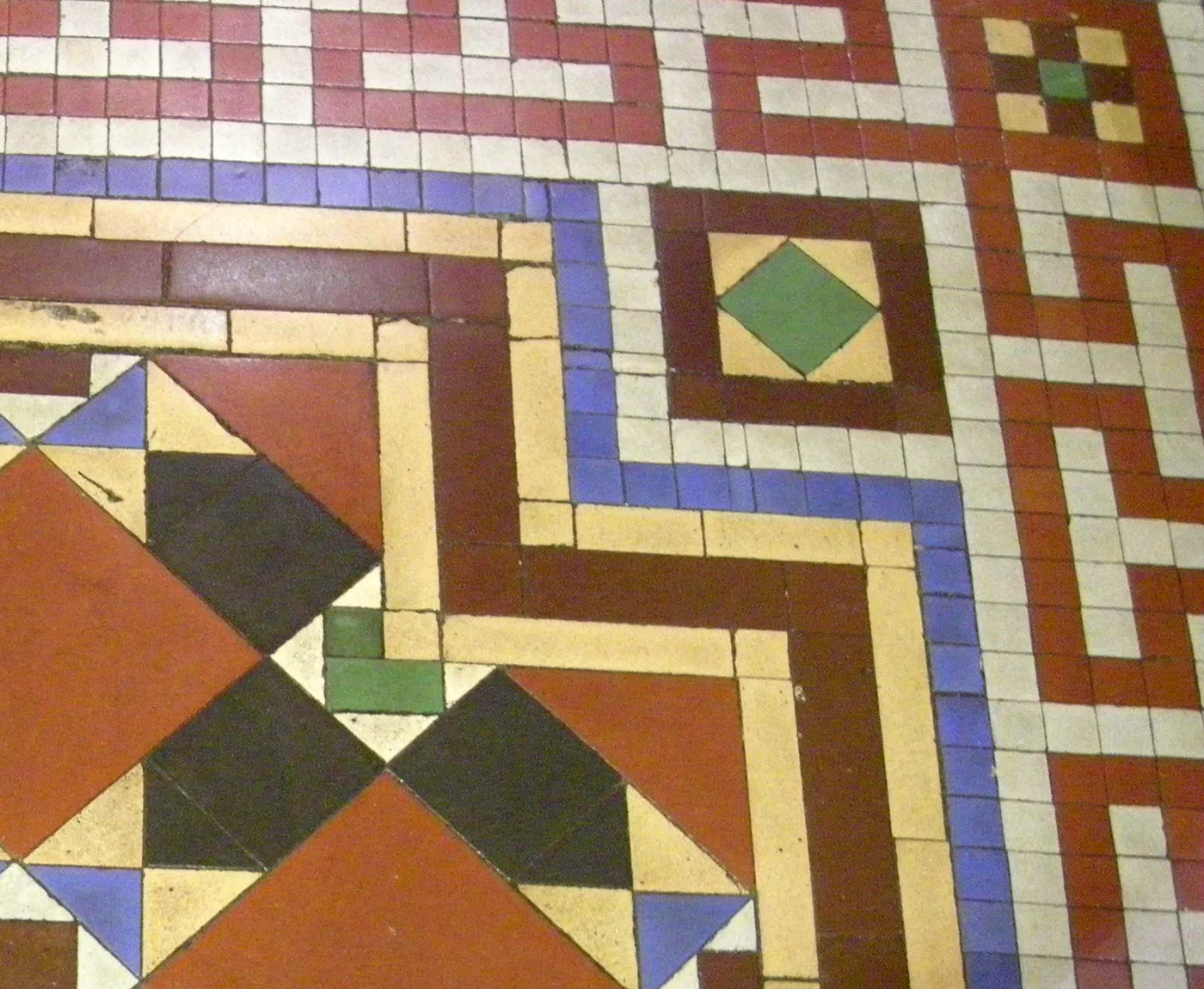
Photo: Bankfield Museum 080 by Linda Spashett Storye_book, CC BY 3.0 via Wikimedia Commons; resized.
In Surrey houses the two you meet most are the quarry or encaustic hall floor of a Victorian terrace and the tiled fireplace surround of a 1930s semi, which is usually glazed or quarry. The hall floor is the one people regret painting.
Fresh paint versus dried paint
The first decision is how long the paint has been there, because it changes everything.
Fresh paint is still a liquid or a soft film. On a glazed tile, wipe it up with a damp cloth while it is wet and it is gone. On a porous quarry or encaustic tile, a fresh spill should be blotted, not rubbed — rubbing works the paint into the pores and makes the stain permanent.
Dried paint is a different material. Water-based emulsion and eggshell soften with warm soapy water or a dedicated water-based paint remover. Oil-based gloss and old enamel need a solvent such as white spirit or methylated spirits, or a solvent-based stripper, and may need time to soften.
Glazed tiles: the gentlest way first
Because paint cannot soak into a glaze, a glazed tile is the one case where scraping is the right tool rather than a last resort.
Start with a plastic scraper — an old credit card or a proper plastic scraper — and work the edge of the dried drip. Most water-based paint lifts off in one piece because it has only ever sat on the surface. If it resists, soften it with warm soapy water and a cloth, or with a little white spirit for an oil-based mark, then scrape again.
Only if the paint will not shift do we move to a razor blade held at a very shallow angle, scraping away from the tile edge so the blade cannot dig in. A razor held flat skims dried paint off a glaze cleanly; a razor held steep scores it. Wire wool and abrasive cleaners are the things that ruin glazed tiles, and we avoid them entirely.
Quarry tiles: porous and thirsty
A quarry tile drinks paint, so scraping is the wrong instinct. The paint has to be softened out of the pores, not cut off the top.
The method that works is a chemical paint stripper — a gel or paste rather than a thin liquid, so it sits on the surface and soaks in rather than running off. Spread it over the paint, leave it to dwell for the maker’s stated time, then lift the softened paint with a plastic scraper and wash the residue off. A floor painted several times over may need more than one application.
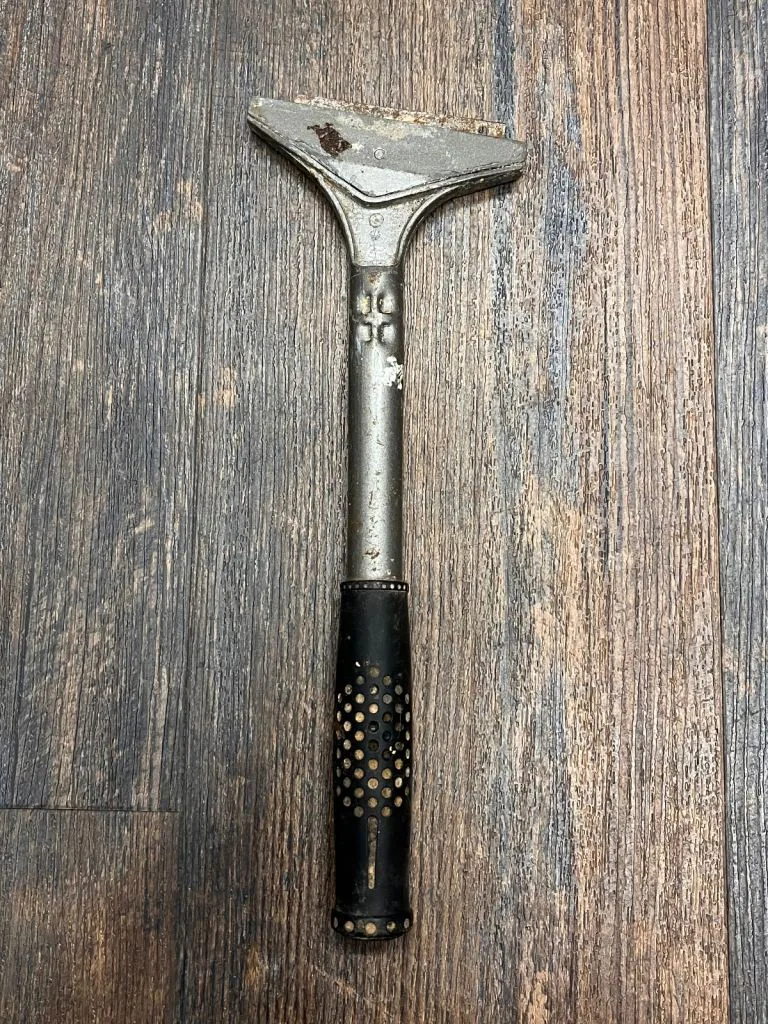
Steam is the gentler alternative where we want to avoid solvent, and it is useful on a quarry floor in a room that is still lived in. A wallpaper steamer or a steam cleaner softens the paint film so it can be lifted with a plastic scraper, though it is slower than a chemical stripper on a heavily painted floor. The one thing we never do to a quarry tile is sand, grind or wire-brush it: the tile is softer than the paint in places, and aggressive abrasion leaves a pale, scarred patch that no sealing will hide.
Encaustic tiles: protect the pattern
Encaustic tiles are the ones where restraint matters most, because the pattern is the tile and there is no second chance.
Here we use the gentlest method that will shift the paint, and we test it on a single tile in a corner before committing to the whole floor. A chemical gel stripper is the usual first choice, applied thinly and left to dwell, then lifted with a plastic scraper held almost flat. We never use a metal scraper, a wire brush, a sander or any abrasive on an encaustic floor, because the coloured clays are soft and the pattern will come away with the paint.
Old paint may be leaded — work wet, not dry
Paint on a Victorian hall floor or a 1930s fireplace can carry lead in its older coats. It changes the method, not the goal: chemical stripper or wet abrasive paper rather than dry sanding, no blow lamp, any hot air gun kept below 500°C, an FFP3 mask, and the area sheeted so the debris is bagged rather than swept. A swab test kit settles it in a minute.
The order of work
When we strip paint from a tiled surface we work to a fixed sequence, and the slowness is the point. This is the sequence for a painted quarry or encaustic floor, the harder case; a glazed wall tile skips the dwell and the drying.
Step 1 — Identify the tile and test the paint
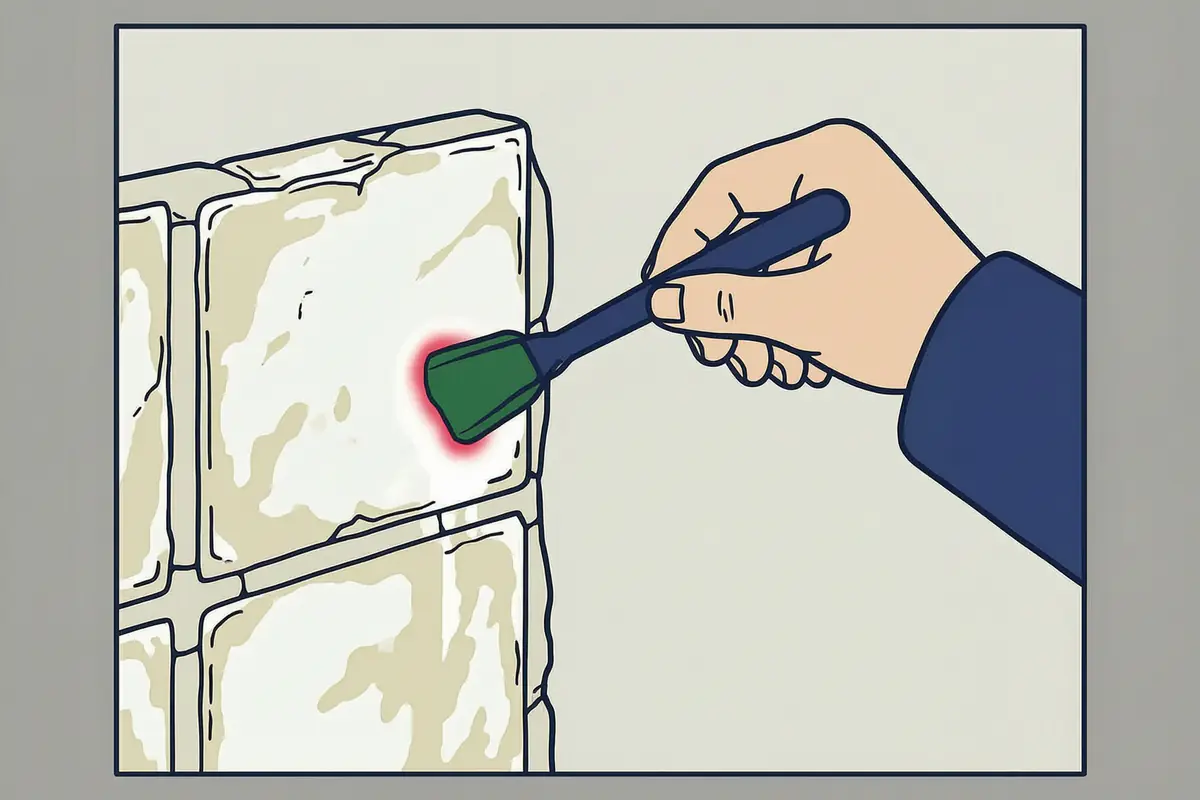
Decide what you are standing on before you buy anything: glazed, quarry or encaustic, and paint that is fresh, dried or many coats deep. Scrape a corner back to the tile with a plastic blade and look at the edge of the paint: a single thin film lifts as a skin, several coats come away as flakes with a step in them. On anything pre-1960s, rub a lead swab on that scraped corner. Pink means work wet and bag the debris; it does not mean stop. Five minutes here decides which stripper and which method the rest of the job uses.
Step 2 — Sheet off and ventilate
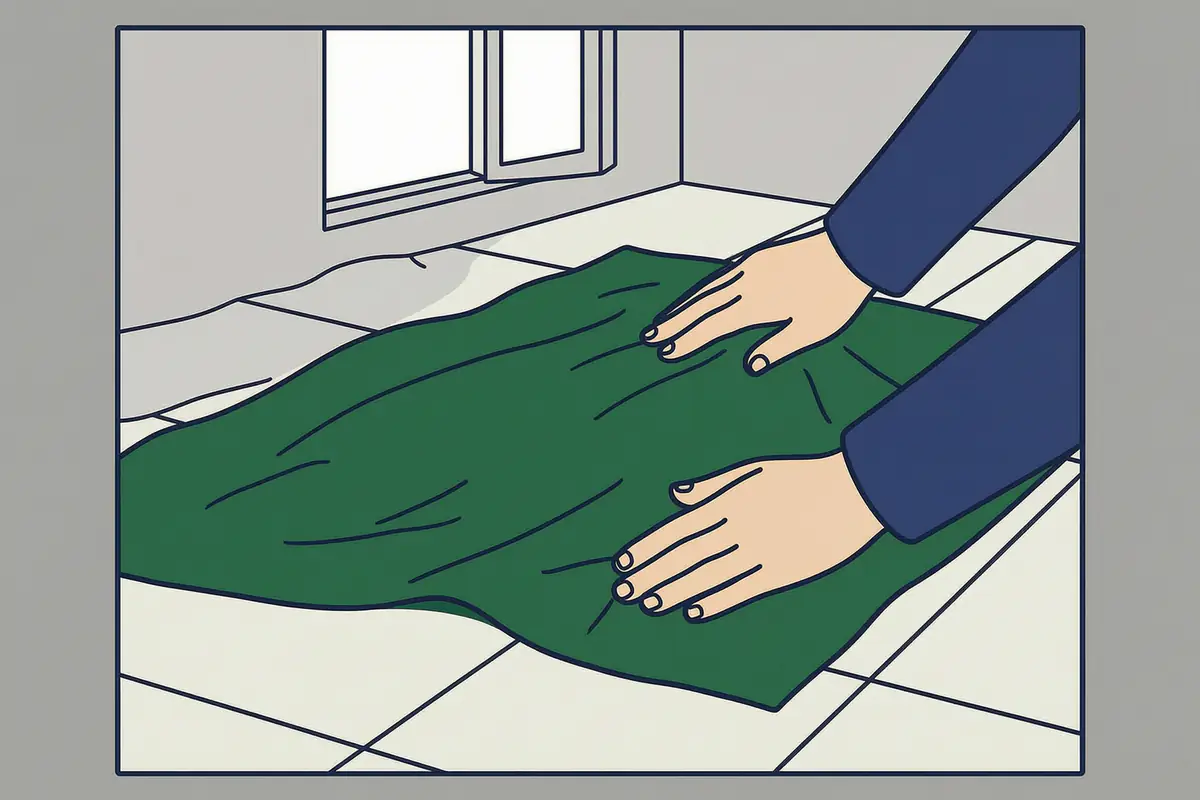
Cover the skirting, the adjoining floor and anything you cannot move with polythene, and tape every edge down so stripper cannot run underneath; a splash of solvent stripper takes the finish off a skirting board as readily as it takes paint off a tile. Then open the room up: solvent strippers need moving air, so a window at each end and a door wedged open, while a poultice needs the room warm enough to work, so do not open every window in January. You are ready when nothing you would mind losing is within a metre of the floor and you can feel a draught at floor level.
Step 3 — Run a test patch
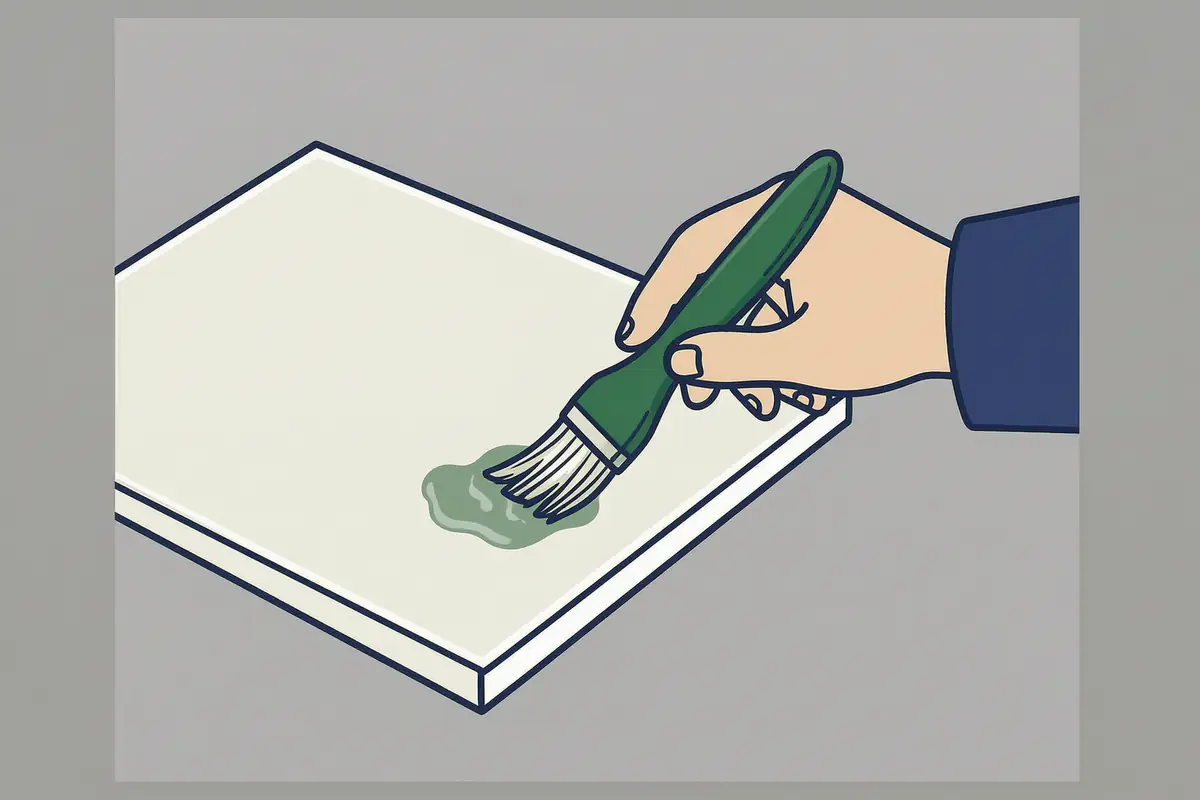
One tile in a corner that furniture will hide. Apply the stripper, time the dwell, lift it, and look at what it did to the paint and — more important — to the tile. On encaustic the test patch is the whole decision: if the colour lifts with the paint, stop and read the repainting section.
Step 4 — Apply the stripper and let it dwell
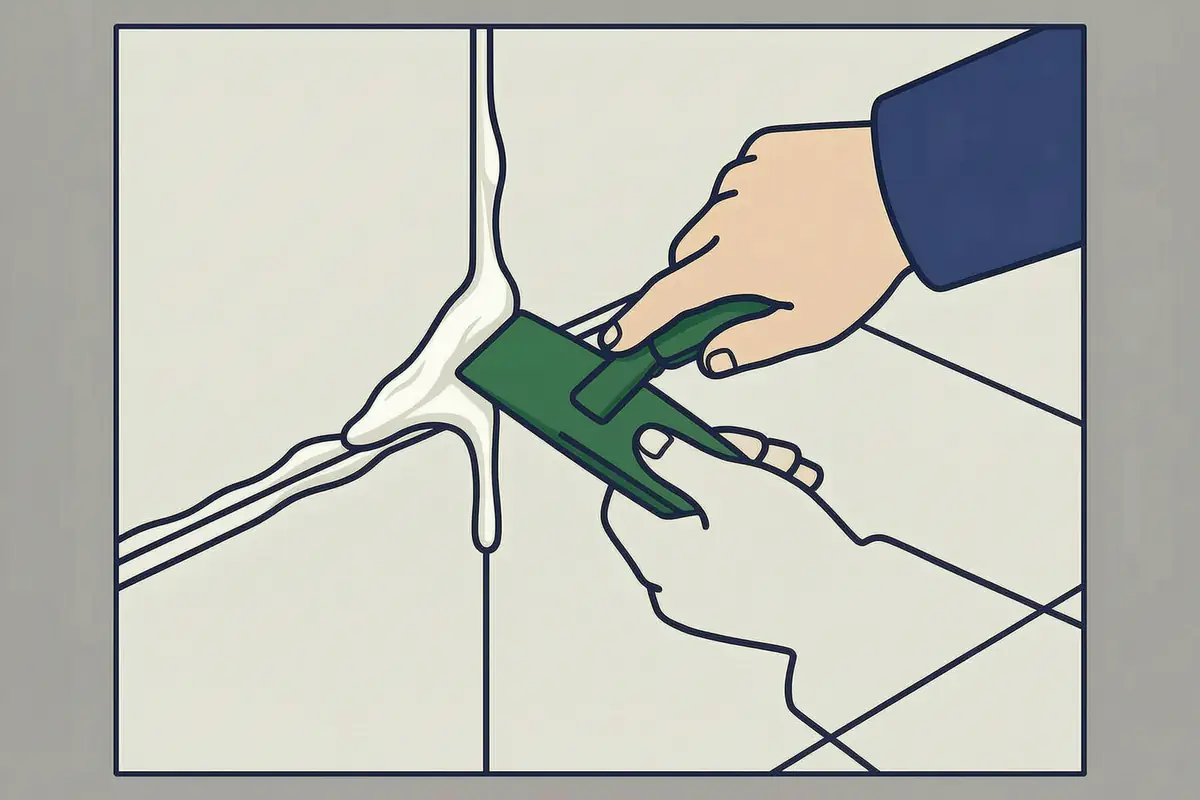
Spread it evenly at the thickness the maker gives, cover a poultice with its sheet, and leave it for the stated time. Check the test patch rather than the clock — a cold floor doubles the dwell, and a stripper left too long on a porous quarry tile starts working on the tile.
Step 5 — Lift the softened paint
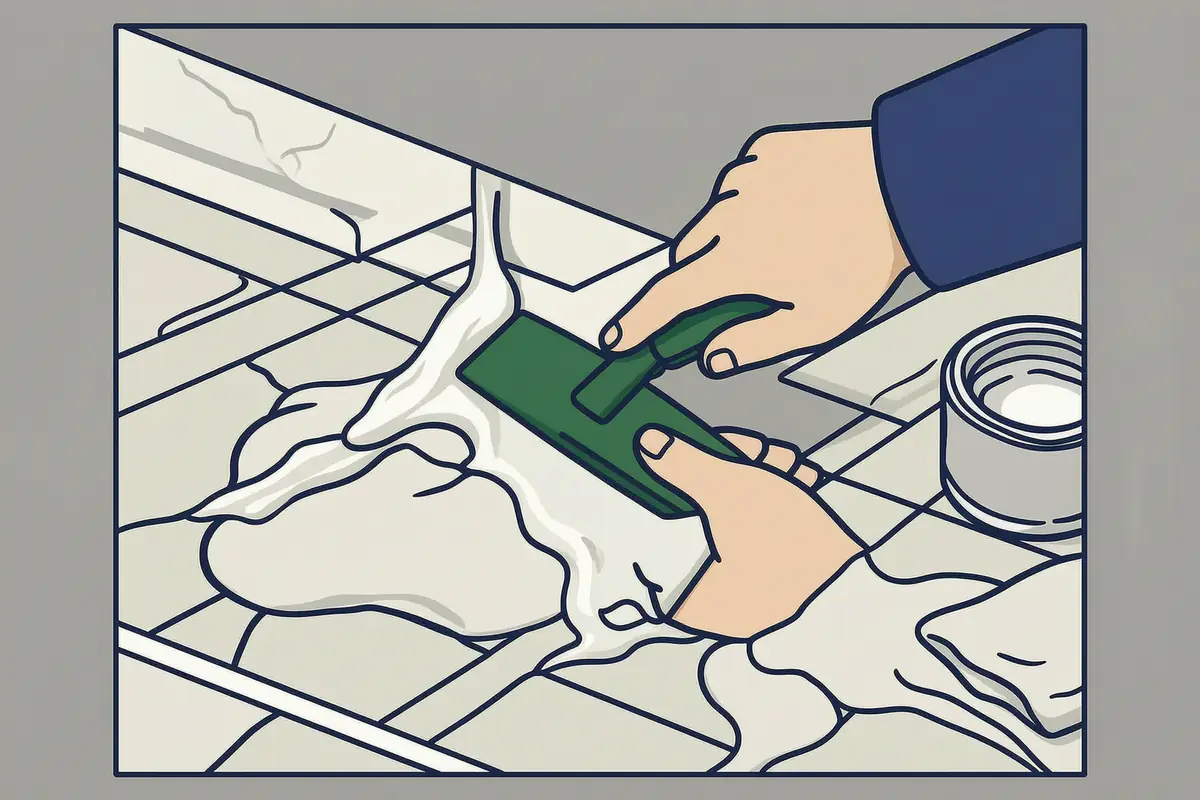
Work with a plastic scraper held almost flat to the tile, pushing under the softened paint in one direction and lifting it away as a sheet or a curl, one section at a time so the stripper on the rest has not set again before you reach it. Drop the waste straight into a bag rather than letting it dry on the floor. Steel scores glaze and drags pigment across encaustic; if plastic will not shift the paint, the answer is more dwell time with fresh stripper, not more force. A section is done when the scraper runs over bare tile without catching.
Step 6 — Wash off the residue
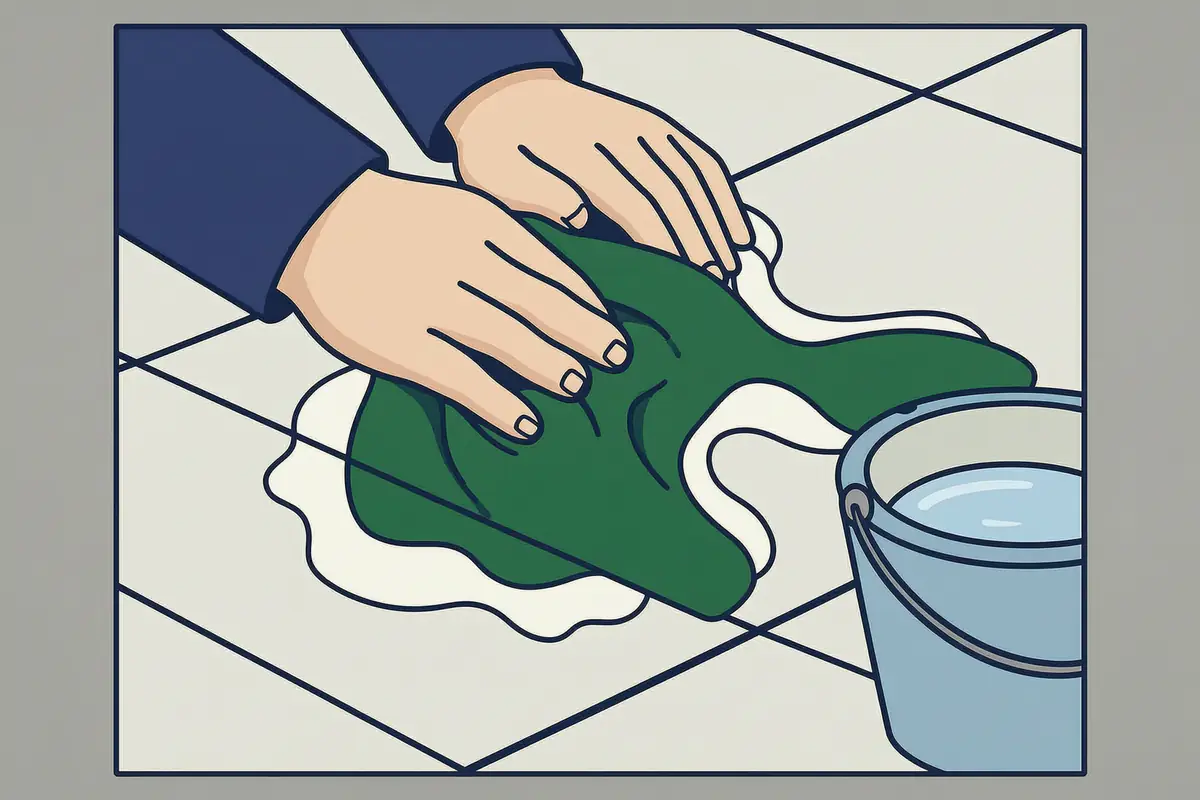
Water for most poultices, the neutraliser for alkaline strippers, then a clean rinse. Residue left in the grout lines shows as a haze once the floor dries and stops any sealer bonding. Bag the spent stripper and scrapings for the council’s hazardous-waste route, not the general bin, and never tip solvent down a drain.
Step 7 — Let it dry before anything goes back on
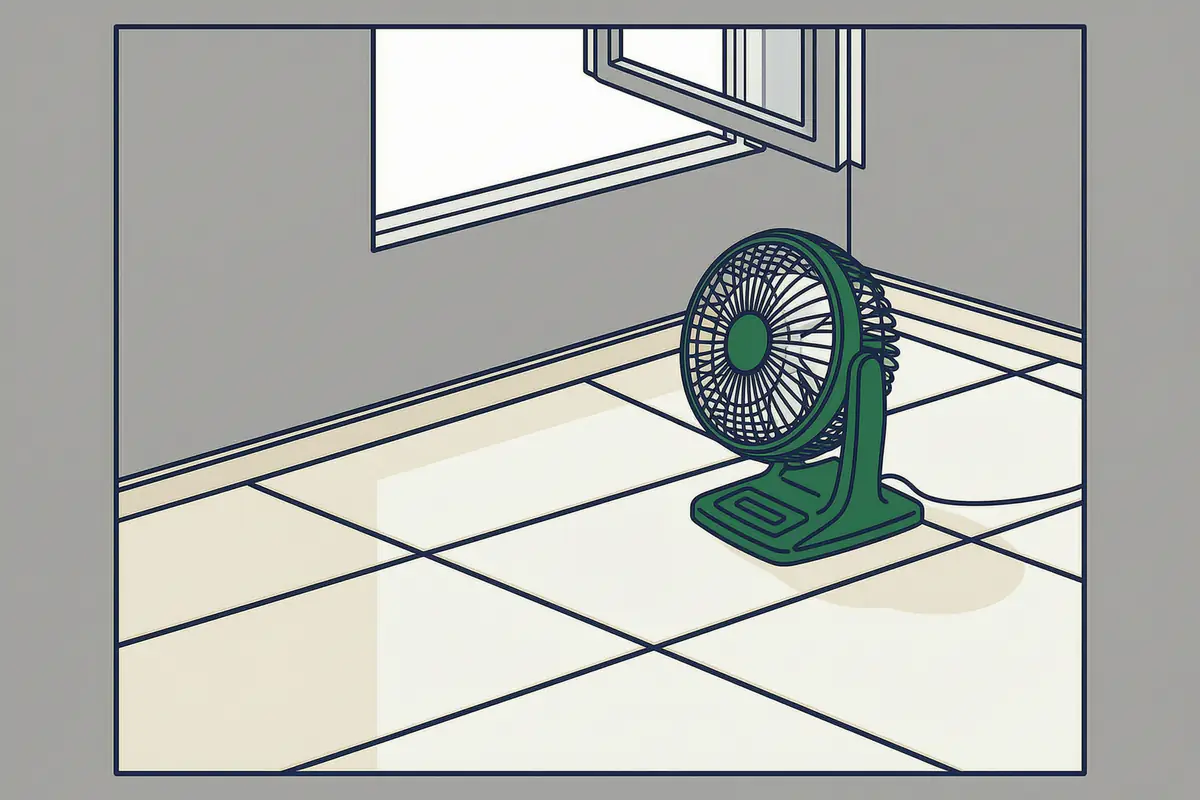
Rinse the floor with clean water and a cloth, then leave it. A quarry or encaustic floor that has been wetted through can take days to dry to the depth of the tile — keep the room warm and the air moving, and do not put rugs or furniture back until the surface has lost its dark, damp look everywhere, including the corners. Sealing or painting over trapped moisture is how a good strip turns into a peeling finish a month later. A dry tile sounds hard under a knuckle and shows an even colour across its face.
When repainting is the better answer
There are times when the right job is not to remove the paint at all, and we say so plainly because it saves a customer a costly mistake.
If the tile is soft, worn or already damaged, stripping it will almost certainly make it worse. If the paint is sound and doing a job — sealing a cold quarry floor, covering a pattern you do not like — removing it is a solution to a problem you do not have. And if the pattern on an encaustic floor is already thin, the risk of losing it outweighs any gain.
In those cases the better job is to make good the existing paint and recoat it. Our period and listed building decorating service works to that principle on older Surrey homes, and our interior painters handle the repaint itself. If the finish is failing rather than simply old, our guide to fixing peeling, flaking and cracking paint covers the make-good, and our guide to removing paint from brick sets out the same lead-paint and stripper discipline on the outside of the house.
Frequently asked questions
How do you get dried paint off glazed tiles?
Dried paint on a glazed tile usually lifts with a plastic scraper, because the paint has only ever sat on the surface. If it resists, soften it with warm soapy water for water-based paint or a little white spirit for oil-based, then scrape again. Move to a razor blade held flat only if the paint will not shift, and never use wire wool or abrasive cleaner, which scratch the glaze.
Will white spirit damage quarry tiles?
White spirit is a mild solvent and will not damage a sound quarry tile, but on its own it rarely shifts old, dried paint because the paint has soaked into the porous surface. It is useful for softening a fresh oil-based splash, but for a painted floor you need a gel or paste stripper left to dwell, not a solvent wipe.
Can you use a heat gun on tiles?
Only with real caution, and never on a leaded surface. A hot air gun can soften a dried drip enough to scrape it, but on a glazed tile the heat can crack the glaze, and on an encaustic tile it risks the pattern. The Health and Safety Executive says to keep any hot air gun below 500 degrees Celsius where lead may be present.
How do you remove paint from an encaustic tiled floor?
With the gentlest method that works, tested on a corner tile first. A chemical gel stripper, applied thinly and left to dwell, then lifted with a plastic scraper held flat, is the usual choice. Never sand, grind, wire-brush or use a metal scraper on an encaustic floor, because the pattern is the body of the tile and comes away with the paint.
Is it better to remove paint from tiles or paint over it?
It depends on the tile and the paint. Sound paint on a soft or worn tile is usually better made good and recoated than stripped, because stripping risks the surface. On a glazed tile a splash is always worth removing; on a worn encaustic floor the risk of losing the pattern may outweigh the gain, and repainting is the safer call.
Does old paint on tiles contain lead?
It can. Lead was widely used in paint until the 1960s, so paint on a Victorian hall floor or a 1930s fireplace may carry lead in its older coats. Treat it as leaded unless you know otherwise, and follow the method in the section above.